
For decades, Volvo was defined by a very specific, fiercely loved silhouette: the boxy, ultra-practical station wagon. It was the chariot of suburban families, antique dealers, and driving purists who valued utility but refused to sit in a high-riding SUV.
But over the last few years, the automotive market underwent a dramatic consolidation. SUVs became the absolute rulers of the road, and Volvo quietly wound down production of its classic long-roofs like the V60 and V90 to make room for high-riding electric crossovers.
Wagon enthusiasts thought the dream was dead. But a stunning new digital design study has just shattered the internet, making a powerful case for the return of the minimalist, low-slung adventurer. Created by former Volvo exterior designer Julien Fesquet (who currently pens vehicles at Los Angeles-based Slate Auto), the Volvo XC77 Concept has officially arrived to challenge modern automotive design. It is a striking, zero-emission “shooting brake” that blends the spirit of classic Scandinavian design with rugged, all-road capability.
Here is why the XC77 is the electric car we desperately need to transition from digital render to real-world production.
1. Bauhaus Logic Meets Modern Aerodynamics
Modern SUVs have a major fundamental flaw in the electric era: they are heavy, tall, and fight against the air like a brick. Fesquet designed the XC77 as a direct rebellion against this high-riding monotony.
The XC77 utilizes a sleek, three-door shooting brake architecture. It draws heavily from Bauhaus design principles and the legendary ethos of Dieter Rams—the iconic industrial designer whose “less, but better” philosophy heavily influenced early Apple products.
The front of the vehicle features an incredibly low nose where the headlights smoothly transition into a fully enclosed, flush radiator panel via a digitized color gradient. The traditional Volvo iron mark has been radically distilled into a single, minimalist horizontal line. It looks remarkably sophisticated, proof that a car doesn’t need aggressive fake vents or massive grills to look commanding.
2. A True Spiritual Successor to the Cross Country
While its sibling concept (the V77) is a pure, low-slung road machine, the XC77 injects Volvo’s iconic Cross Country DNA straight into the design.
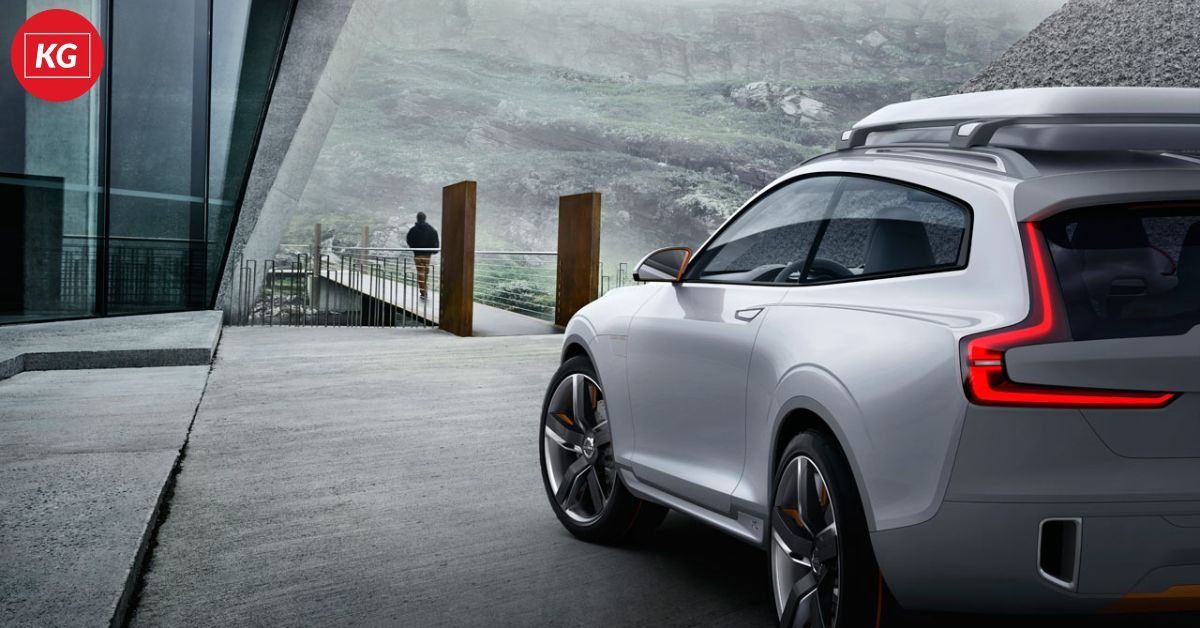
To handle the realities of unpaved weekend adventures, the XC77 features a distinctly lifted ground clearance. The lower perimeter of the car is wrapped in a rugged, bi-tone protective coating designed to deflect gravel and mud. Massive aerodynamic alloy wheels fill out the arches, while crisp, supercar-style functional cutouts behind the front fenders help channel turbulent air away from the wheels to maximize electric range.
At the rear, the design pays homage to the legendary Volvo P1800 ES and the C30 hatchback, featuring an all-glass tailgate surrounded by an ultra-thin, flush loop of signature vertical LEDs.
3. The Anti-Screen, Eco-Luxury Cabin
Step inside the digital rendering of the XC77, and the design shifts its focus heavily toward sustainability and sensory warmth.
Instead of an interior covered in cheap piano-black plastic and blinding, oversized touchscreen displays, the XC77 embraces an earthy, minimalist lounge layout. The cabin features an immersive orange color palette that beautifully offsets the rugged brown exterior body panels.
A Focus on Circularity:
In line with Volvo’s actual goal of becoming a fully circular company, the concept’s interior is constructed entirely using recycled, premium textiles, bio-attributed Nordico materials, and unpainted structural elements that drastically reduce the vehicle’s manufacturing carbon footprint.
4. The Engineering Backbone Already Exists
While the XC77 is technically a independent designer’s passion project, it isn’t a total pipe dream. The mechanical architecture required to build a car exactly like this is rolling out right now.
Volvo’s Chief Technology Officer, Anders Bell, recently confirmed that the brand’s highly anticipated SPA3 electronic architecture is uniquely modular. While it is debuting underneath traditional crossovers like the upcoming EX60, the platform is fully capable of supporting low-slung, aerodynamic body styles if market demand is there.
Pair this modular platform with a dual-motor all-wheel-drive setup, and an production version of the XC77 could effortlessly deliver over 350 horsepower while slipping through the air with far greater efficiency than a standard, bulky SUV.
The Verdict: Build It, Volvo!
The Volvo XC77 represents a beautiful alternative reality. It proves that transitioning to an electric future doesn’t mean we have to surrender to a monoculture of identical-looking family crossovers. It proves that a car can be ruggedly adventurous, immensely practical, and drop-dead gorgeous all at the same time.
While Volvo hasn’t officially greenlit a production shooting brake just yet, the viral response to the XC77 proves that the automotive world is hungry for minimalist, functional design. Over to you, Gothenburg—it’s time to bring the wagon home.














Leave a Reply