
When Mercedes-Benz updates the S-Class, it is never just about changing a grille or adding a few new features. The S-Class has always been the benchmark for what a flagship luxury sedan should feel like, and every update to it carries a bigger meaning. It tells us where premium automotive technology is headed, what luxury buyers will expect next, and how brands plan to combine comfort, performance, efficiency, and intelligence in a single package.
That is exactly why the 2026 Mercedes-Benz S-Class facelift matters so much. On the surface, it may look like a mid-cycle update to the existing S-Class, but in reality, the facelift brings a surprisingly deep set of changes. Mercedes has refined the design, upgraded the interior experience, reworked the digital architecture, enhanced electrification, and improved the overall luxury quotient of the car. Compared to the old S-Class, the new model feels less like a simple refresh and more like a meaningful evolution of the flagship sedan formula.
So, if you are wondering what really changes in the new car and whether the facelift is a major step forward, here are the top 5 things the new 2026 Mercedes-Benz S-Class facelift gets over the old S-Class.
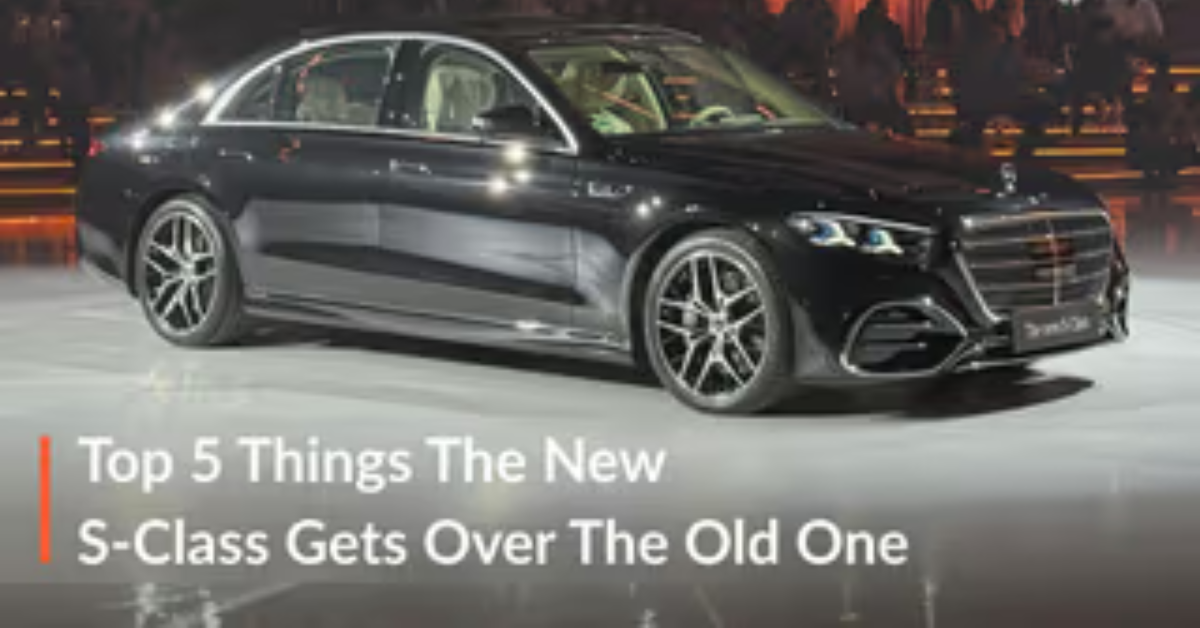
1) A More Dramatic and Premium Exterior Design
The old S-Class was elegant, understated, and instantly recognizable. It carried the classic limousine silhouette beautifully, but its design was more about subtle prestige than visual drama. The 2026 S-Class facelift keeps the same basic shape, but it adds far more theatre and sophistication to the overall look.
What changes on the outside?
The facelifted model introduces a more expressive front-end treatment with:
- A larger illuminated grille that gives the sedan a stronger visual identity
- New headlamp design with a more distinctive lighting signature
- Updated front bumper styling for a more modern and premium appearance
- Refined rear lamp graphics and cleaner detailing at the back
- Fresh alloy wheel designs that add to the luxury stance
- More polished exterior detailing that makes the car look richer and more futuristic
The older S-Class looked classy, but the facelifted version is designed to feel more special even at a glance. The lighting elements, grille treatment, and subtle body detailing give the new car a much stronger “flagship” presence. It looks more contemporary, more tech-driven, and more expensive without losing the sophistication that S-Class buyers expect.
Why this matters
In the luxury segment, design is not just about beauty—it is about presence. Buyers spending at this level want a car that feels unmistakably premium the moment it arrives. The 2026 facelift gives the S-Class that extra visual impact while still preserving the elegance of the outgoing model. It is not radical, but it is definitely more attention-grabbing and more in line with modern luxury design trends.
2) A Completely More Tech-Heavy Dashboard and Screen Experience
If the exterior changes feel significant, the interior transformation is where the new S-Class really starts pulling away from the old one. The outgoing S-Class already had a luxurious cabin with a large vertical touchscreen and a premium layout, but the 2026 facelift takes the digital experience to another level.
The biggest cabin upgrade: a new full-width screen-focused layout
One of the most talked-about upgrades in the new S-Class is the shift to a more futuristic dashboard setup. Instead of relying mainly on the previous vertical infotainment arrangement, the facelifted model introduces a more immersive digital environment with:
- A larger central infotainment display
- A dedicated passenger-side display
- A fully digital driver display
- A wider, cleaner, more high-tech dashboard design
- A more integrated “screen lounge” feel across the cabin
This creates a completely different atmosphere inside the car. The old S-Class felt luxurious and elegant. The new one feels luxurious and digitally futuristic. It is more like a luxury tech suite on wheels.
Better user experience for front and rear passengers
The facelift is expected to improve not just the size of the displays but also how the system works. The new setup aims to offer:
- Faster response times
- Better voice functionality
- More connected features
- Improved navigation visuals
- Enhanced media and entertainment control
- More personalization for passengers
For rear-seat users, the S-Class has always been special, but the facelift strengthens the car’s identity as a chauffeur-driven luxury machine as well as a self-driven flagship sedan. The interior now feels more advanced, more premium, and more in tune with the expectations of wealthy buyers who want their car to behave like a smart luxury device.
3) More Advanced Software, Connectivity and Digital Intelligence
The old S-Class already packed impressive digital features, but the 2026 facelift goes much further by focusing on the software layer of the experience. This is one of the most important upgrades because luxury cars today are no longer judged only by leather, wood, and rear-seat comfort—they are also judged by how smart, connected, and intuitive they feel.
What improves in the new S-Class?
The facelift is expected to bring a much more advanced digital ecosystem with:
- A newer infotainment operating environment
- Smarter voice assistant functionality
- Better connected car integration
- More over-the-air update capability
- Improved personalization and user profiles
- Better integration of navigation, media, comfort controls, and vehicle settings
This matters because the S-Class is not just supposed to be comfortable—it is supposed to feel ahead of its time. Mercedes appears to be positioning the facelifted S-Class as a luxury sedan that can evolve digitally even after purchase, rather than remaining static.
Why this is a major upgrade over the old car
In the older S-Class, the tech experience was already impressive, but it still felt like a premium infotainment package inside a luxury sedan. In the facelifted car, the digital architecture itself becomes a central part of the ownership experience. The new S-Class is being shaped more like an intelligent flagship platform rather than simply a well-equipped limousine.
That means the car is not only about plush seats and quiet cabin insulation anymore. It is also about:
- smarter interaction,
- deeper software integration,
- more seamless passenger entertainment,
- and a more future-ready interface between car and owner.
For buyers who value the latest automotive technology, this is one of the most important reasons to prefer the facelift over the old S-Class.
4) Stronger Electrification and a More Modern Powertrain Strategy
One of the biggest shifts in the 2026 Mercedes-Benz S-Class facelift is under the skin. While the older S-Class offered a premium and refined powertrain lineup, the facelift pushes things further by embracing stronger electrification and cleaner, more advanced powertrain tuning.
What’s new on the powertrain side?
The updated S-Class is expected to benefit from:
- Improved hybrid assistance across the range
- Better efficiency-focused tuning
- A stronger plug-in hybrid direction in select variants
- Smoother low-speed performance and refinement
- Improved emissions compliance with modern engine revisions
- A better balance between performance and fuel efficiency
This is a very important step because flagship luxury buyers today expect performance, but they also increasingly care about efficiency, smoothness, and sustainability. A modern S-Class cannot rely only on big engines and effortless cruising anymore—it also has to prove that it is aligned with the future of luxury mobility.
Why the facelift feels more future-ready
Compared to the old S-Class, the new model is expected to offer a more advanced electrified driving experience. In practical terms, that can mean:
- quieter city driving,
- better responsiveness at low speeds,
- smoother stop-start behavior,
- and improved overall efficiency for a car of this size and class.
In some versions, the electrified setup can also make the car more attractive to buyers who want the comfort and prestige of an S-Class without feeling like they are driving an outdated fuel-hungry limousine.
For India and other global markets, this matters a lot because the premium segment is increasingly moving toward electrification—but many buyers still want the familiarity and long-distance comfort of a combustion-based flagship. The facelifted S-Class tries to offer the best of both worlds.
5) A More Luxurious Rear-Seat and Overall Comfort Experience
The S-Class has always been a benchmark for rear-seat comfort, but the 2026 facelift sharpens its focus on being a true rolling lounge. Mercedes knows that many S-Class buyers use the car with a chauffeur, and for them, the rear seat is not just another place to sit—it is the main event.
What gets better in the comfort department?
The facelift continues to build on the S-Class’ strengths with likely improvements in:
- Rear-seat entertainment and digital controls
- Seat comfort and adjustability
- Cabin ambience and trim presentation
- Noise insulation and ride smoothness
- Material richness and personalization options
- Overall passenger convenience and luxury feel
The old S-Class was already one of the most comfortable luxury sedans in the world. The new one does not reinvent that formula, but it deepens it by combining comfort with more technology and a more modern ambience.
The luxury difference is in the details
At this level, luxury is often defined by details that may not show up on a basic spec sheet:
- how quietly the car isolates road noise,
- how naturally the seat supports your body on long journeys,
- how intuitively rear-seat controls work,
- how premium the materials feel in hand,
- and how effortlessly the car turns everyday travel into a relaxing experience.
The facelifted S-Class appears to improve exactly these areas. It aims to feel more like a mobile first-class suite rather than just a premium sedan with a long wheelbase.
So, Is the 2026 S-Class Facelift a Big Upgrade Over the Old S-Class?
Yes, and that is what makes this facelift interesting.
At first glance, some buyers may assume the new S-Class is just a cosmetic refresh. But once you look closely, it becomes clear that Mercedes has touched almost every area that matters in a flagship sedan:
- The exterior looks richer and more modern
- The cabin has become far more digital and immersive
- The software and connected technology are more advanced
- The powertrain strategy is more electrified and future-focused
- The comfort and luxury experience have been elevated further
The older S-Class still remains a superb luxury sedan. It is elegant, deeply comfortable, and packed with prestige. But the 2026 facelift adds a new layer of intelligence and modernity that pushes the car closer to what a next-generation flagship should feel like.
Final Verdict
The 2026 Mercedes-Benz S-Class facelift is not just about looking fresher than the old S-Class. It is about becoming more technologically advanced, more digitally connected, more electrified, and even more luxurious than before. Mercedes has taken a car that was already a benchmark and tried to future-proof it without compromising the serenity and sophistication that define the S-Class name.
If the old S-Class represented traditional modern luxury, the facelifted model represents intelligent modern luxury. It still offers the comfort, rear-seat experience, and prestige buyers expect, but now wraps those strengths in a more dramatic design, smarter cabin tech, and a more future-ready mechanical package.













Leave a Reply