
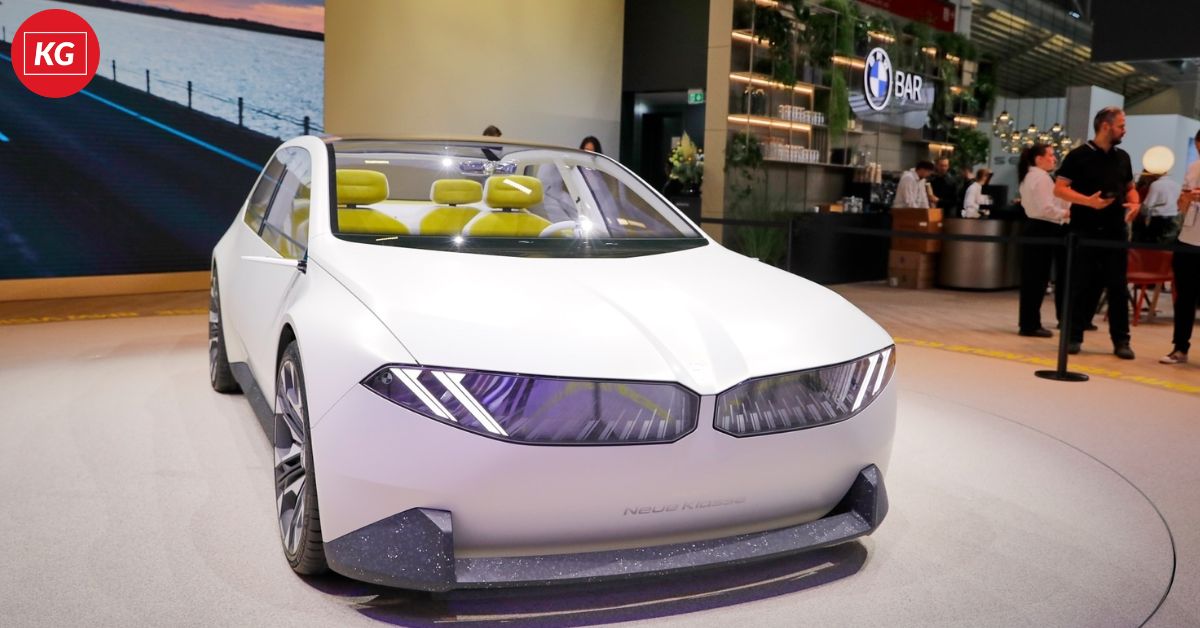
For over half a century, three letters have represented the absolute pinnacle of internal combustion harmony: BMW M. The recipe was as sacred as it was simple: high-revving engines, communicative steering, mechanical limited-slip differentials, and a chassis balanced perfectly on the edge of adhesion.
So, when BMW confirmed that its next-generation performance icon—the upcoming all-electric M3—is trading pistons for electrons, purists collectively held their breath. Can the visceral, emotional DNA of Garching survive a silent revolution?
BMW’s answer is a resounding, hyper-engineered yes. Far from a standard luxury EV with a software tune, the upcoming all-electric M high-performance generation is a ground-up reinterpretation of driving dynamics, boasting a hypercar-crushing quad-motor system and a structural brain that redefines modern agility.
The “Heart of Joy”: A Super-Processor for Physics
In a traditional performance car, mechanical linkages and electronic differentials manage power. When a wheel slips, a series of mechanical clutches or braking micro-interventions react. In the upcoming electric M architecture, those mechanical intermediaries are completely gone, replaced by a central super-computer nicknamed the Heart of Joy.
Operating ten times faster than any current chassis management software, this central processing unit acts as a master conductor for the powertrain. It integrates throttle inputs, steering angle, braking pressure, and energy recuperation into a singular, cohesive stream of data.
Instead of reacting to a loss of traction, the system calculates surface grip in real time, proactively dictating exactly how much torque each individual tire can handle before a slide even begins.
Four Motors, Unprecedented Control
At the core of this engineering marvel lies BMW M eDrive technology, utilizing an independent electric motor at each individual wheel. This quad-motor configuration elevates torque vectoring from a handling assist feature into the car’s primary mechanism for steering and stability.
The system unlocks capabilities that mechanical drivetrains could only dream of:
- Instantaneous Power Shifting: Power can be shuttled diagonally, laterally, or completely to a single outside wheel within milliseconds, magically masking the inherent weight of a massive lithium-ion battery pack pack during aggressive cornering.
- Rear-Wheel Drive On-Demand: While the quad-motor setup forms a hyper-advanced, variable all-wheel-drive system under heavy load, the front axle can be completely decoupled. At the press of a button, the car reverts to a traditional, tail-happy rear-wheel-drive layout, preserving the classic drift-ready behavior that defines M history.
- Four-Digit Horsepower: Rumors from track testing point toward a combined output safely clearing 1,000 horsepower, making this upcoming vehicle the quickest and most powerful road-going M model ever constructed.
“Design to Power”: Battery Tech That Doesn’t Fade
The historic Achilles’ heel of high-performance electric vehicles has never been straight-line speed; it has been endurance. Standard EVs excel at single-burst acceleration but quickly experience thermal degradation on a racetrack, cutting power to protect battery health.
To solve this, BMW M is introducing a “Design to Power” chemistry within its next-generation Gen6 cylindrical battery cells. Rather than prioritizing maximum driving range above all else, this custom 100+ kWh pack is engineered specifically for hyper-fast energy discharge and sustained thermal stability.
Supported by a radical, multi-channel structural cooling system, the battery is designed to handle continuous hot laps without dropping its power ceiling. Furthermore, its advanced 800-volt architecture can support blazing 400kW DC fast charging—allowing drivers to recoup hundreds of miles of range in under ten minutes during track-day pit stops.
Preserving the Emotional Connection
BMW M engineers openly acknowledge that performance isn’t purely a game of numbers; it is an emotional experience built on sensory feedback. To bridge the gap for legacy petrolheads, the electric M lineup will introduce an incredibly sophisticated tactile interface.
Using technology reminiscent of what made cars like the Hyundai Ioniq 5 N a critical success, the electric M model features a highly responsive emulated gearshift system. Drivers can use steering-wheel-mounted paddles to trigger realistic, simulated interruptions in power delivery, mimicking the physical shifting characteristics of a dual-clutch transmission.
When paired with a dynamically synthesized acoustic soundscape that responds directly to load, speed, and cornering forces, the vehicle creates a cohesive, highly engaging sensory loop that proves electric performance doesn’t have to feel sterile.
The Verdict: A Parallel Future
BMW is playing a brilliant strategic hand. For drivers committed to internal combustion, a heavily refreshed, twin-turbocharged inline-six variant will continue to sell right alongside the newcomer.
But by positioning the all-electric version at a practically identical price ballpark, BMW isn’t treating electric mobility as an eco-conscious compromise. Instead, they are positioning the electric M model as the ultimate expression of raw speed and technological dominance—a true high-performance machine engineered flawlessly for the next era of driving.













Leave a Reply