
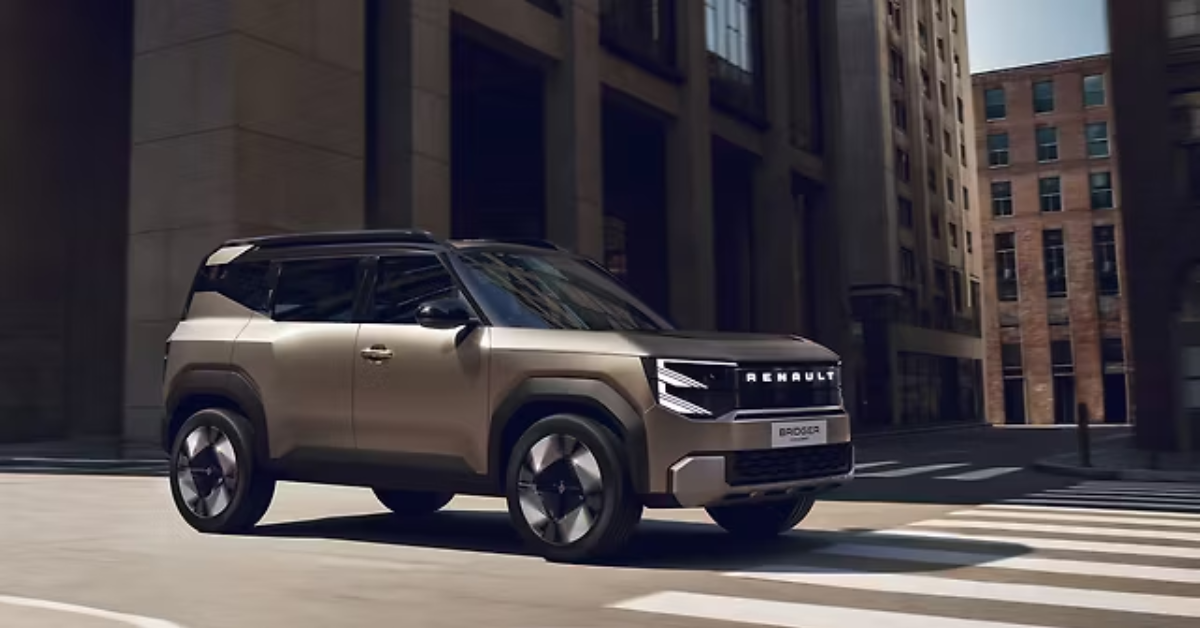
Renault is gearing up for a major comeback in India, and one of the most exciting products in its future lineup is the upcoming Renault Bridger. Positioned as a compact SUV with a modern approach, the Bridger is expected to feature both a turbocharged petrol engine and a fully electric (BEV) iteration.
This dual-powertrain strategy is a clear indication that Renault is preparing for both present-day demand and the future of mobility. With rising competition in the sub-4-meter SUV segment and increasing demand for electric vehicles, the Bridger could become a key product for the brand’s revival.
Let’s explore everything you need to know about this upcoming SUV and why it could be a game-changer.
Renault’s Big Strategy Behind the Bridger
The Renault Bridger is not just another SUV launch—it is part of the brand’s long-term growth plan. Renault aims to introduce multiple new models in India by 2030, and the Bridger will play a crucial role in this strategy.
The company is focusing on:
- Expanding its presence in high-demand segments
- Introducing modern platforms
- Offering multiple powertrain options including EVs
The Bridger fits perfectly into this plan by targeting a wide range of buyers.
Turbocharged Petrol Engine: Performance Meets Efficiency
One of the biggest highlights of the Renault Bridger is its new turbocharged petrol engine.
Expected specifications include:
- 1.2-litre turbo petrol engine
- 3-cylinder setup
- Power output around 110–115 hp
- Torque close to 190 Nm
This engine is designed to deliver:
- Strong low-end torque for city driving
- Smooth acceleration for highway use
- Better fuel efficiency compared to larger engines
The turbo engine also fills a gap in Renault’s current lineup, offering performance-oriented buyers a more exciting option.
Electric (BEV) Version: A First for Renault India
Perhaps the most significant development is the introduction of a fully electric version of the Bridger.
This BEV iteration could:
- Feature a battery pack of up to 40 kWh
- Offer a claimed range close to 400–500 km
- Deliver a real-world range of around 300–350 km
If launched, this will likely be Renault’s first electric car in India, marking a major milestone for the brand.
Why This Matters
- Expands Renault’s presence in the EV segment
- Offers buyers a choice between petrol and electric
- Aligns with India’s growing EV adoption
Multi-Energy Platform Advantage
The Renault Bridger will be built on a new platform that supports multiple powertrains, including petrol and electric.
This flexible architecture allows Renault to:
- Reduce development costs
- Offer different variants under one model
- Adapt quickly to changing market demand
This approach is becoming increasingly popular among global automakers as it improves efficiency and scalability.
Design & Styling Expectations
While official design details are limited, the Bridger is expected to feature a bold and modern design language.
Expected highlights:
- Strong SUV stance
- Muscular body lines
- LED lighting elements
- Sporty and youthful appeal
Renault is likely to position the Bridger as a stylish alternative to existing compact SUVs, targeting younger buyers.
Interior & Features
The Bridger is expected to offer a well-equipped cabin with modern features.
Possible highlights include:
- Large touchscreen infotainment system
- Wireless smartphone connectivity
- Digital instrument cluster
- Automatic climate control
- Premium upholstery in higher variants
The focus will likely be on balancing affordability with essential modern features.
Performance: Petrol vs Electric
The dual-powertrain approach creates two distinct personalities for the Bridger.
Turbo Petrol Version
- Ideal for traditional buyers
- Better suited for long-distance driving
- Easier refueling and widespread support
Electric Version
- Zero emissions
- Lower running costs
- Instant torque for quick acceleration
This flexibility gives buyers the freedom to choose based on their needs and lifestyle.
Expected Pricing Strategy
Pricing will be crucial for the success of the Bridger.
Expected price range:
- Petrol variants: Around ₹8–12 lakh
- Electric variants: Around ₹12–15 lakh
This positioning allows Renault to compete across multiple segments and attract a wide audience.
Competition in the Market
The Renault Bridger will enter one of the most competitive segments in India.
Petrol Rivals
- Tata Nexon
- Hyundai Venue
- Maruti Brezza
- Mahindra XUV 3XO
Electric Rivals
- Tata Nexon EV
- Mahindra XUV 3XO EV (expected)
By offering both petrol and EV options, the Bridger can compete in two segments simultaneously.
Advantages of the Bridger Strategy
1. Dual Powertrain Flexibility
Buyers can choose between petrol and electric without switching models.
2. Future-Ready Approach
Supports the transition toward electric mobility.
3. Strong Performance Potential
Turbo engine offers better driving dynamics.
4. Wider Market Appeal
Targets both budget-conscious and tech-savvy buyers.
Challenges Renault May Face
Despite its strong potential, the Bridger will face several challenges:
- Intense competition in the compact SUV segment
- Need for strong after-sales support
- Building trust in the EV segment
- Pricing pressure from established brands
Execution will be key to success.
Launch Timeline
The Renault Bridger is expected to launch around 2027, with production likely to begin in India before that.
This timeline gives Renault enough time to:
- Refine the product
- Build infrastructure for EV support
- Strengthen its market position
Pros and Cons (Expected)
Pros
- Turbocharged engine for better performance
- Fully electric version available
- Modern platform and design
- Competitive pricing strategy
Cons
- Late entry into a crowded segment
- EV infrastructure limitations
- Brand perception challenges
- Unproven product in India
Final Verdict
The Renault Bridger has the potential to redefine Renault’s presence in India. By combining a turbocharged petrol engine with a fully electric variant, it offers a unique proposition in the compact SUV segment.
This dual approach ensures that the Bridger is not just relevant today but also prepared for the future.
Conclusion
The Renault Bridger represents a bold step forward for the brand. It combines performance, innovation, and flexibility in a way that few competitors currently offer.
If Renault manages to deliver on its promises—competitive pricing, strong features, and reliable performance—the Bridger could become a major success story in India.













Leave a Reply