
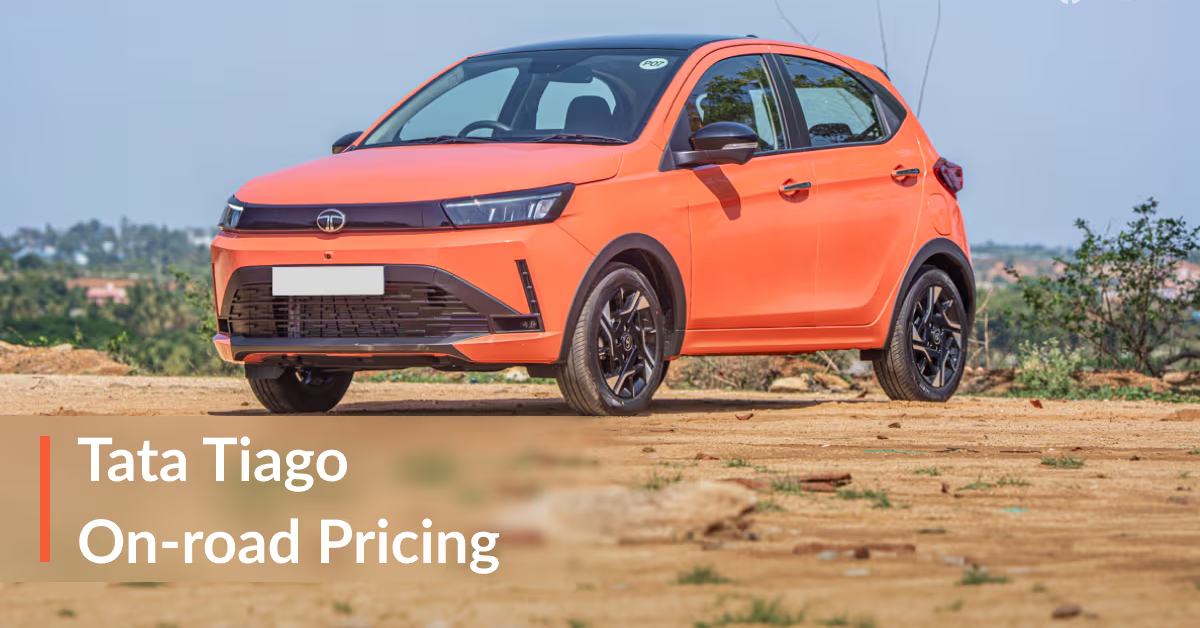
The Indian electric vehicle market is evolving rapidly, and Tata Motors continues to lead the affordable EV segment with practical and budget-friendly electric cars. Among them, the Tata Tiago EV has emerged as one of the most successful entry-level electric hatchbacks for Indian buyers.
Its popularity comes from a simple formula:
- Affordable pricing
- Easy city usability
- Compact dimensions
- Decent range
- Low running costs
However, one challenge continues to dominate conversations around affordable EVs — driving range.
Many buyers still hesitate to switch to electric vehicles because of range anxiety. They want EVs that can comfortably handle daily city usage while also offering enough battery backup for occasional long-distance travel.
Now, reports and industry expectations suggest that the upcoming 2026 Tata Tiago EV could deliver significantly more driving range without a major increase in price.
That sounds almost too good to be true.
So how can Tata improve range while keeping pricing affordable? The answer lies in smarter battery management, improved efficiency, better aerodynamics, lighter components, and advancements in EV technology.
Let’s explore how the next-generation Tata Tiago EV could offer a lot more range at nearly the same cost.
Why Range Matters So Much in Affordable EVs
Range is one of the most important factors for EV buyers, especially in India.
Unlike luxury EV buyers, entry-level electric car customers are highly price-sensitive. They want maximum value from every charge because:
- Public charging infrastructure is still growing
- Long-distance EV confidence is still developing
- Buyers want fewer charging stops
- Daily convenience matters greatly
For many first-time EV users, better range directly translates into:
- Lower stress
- Better practicality
- Increased confidence
- Improved ownership satisfaction
That is why improving range without increasing price could become a major advantage for Tata Motors.
Battery Technology Is Improving Rapidly
One of the biggest reasons the Tiago EV could gain more range is the rapid improvement in battery technology.
Modern EV Batteries Are Becoming More Efficient
Battery manufacturers are continuously improving:
- Energy density
- Thermal efficiency
- Charging speeds
- Weight reduction
- Battery management systems
This means newer batteries can store more usable energy within a similar physical size.
As battery chemistry improves, Tata may be able to extract:
- Better efficiency
- Longer driving range
- Improved durability
without dramatically increasing production costs.
Software Optimization Can Increase Range Significantly
Modern electric vehicles rely heavily on software.
The upcoming Tiago EV could benefit from:
- Smarter battery management
- Improved regenerative braking
- Better energy distribution
- Advanced power optimization
Why Software Matters
Even small improvements in software efficiency can increase:
- Real-world driving range
- Battery performance
- Energy recovery efficiency
For example, better regenerative braking systems can recover more energy during braking and city driving.
This helps improve range without requiring a larger battery pack.
Tata Could Improve Aerodynamics
Aerodynamics play a major role in electric vehicle efficiency.
Better Aerodynamics = Better Range
Electric cars benefit heavily from:
- Reduced drag
- Smoother airflow
- Optimized body design
The updated Tiago EV may receive:
- Redesigned bumpers
- Improved airflow channels
- More aerodynamic alloy wheels
- Better underbody airflow management
Even subtle design changes can improve overall efficiency.
At highway speeds, aerodynamic improvements can significantly extend battery range.
Weight Reduction Could Improve Efficiency
Reducing vehicle weight is another effective way to improve EV range.
Why Lower Weight Matters
A lighter car requires:
- Less energy to move
- Less battery strain
- Reduced rolling resistance
The new Tiago EV could use:
- Lighter materials
- Optimized chassis components
- Improved battery packaging
- More efficient structural engineering
Even small reductions in weight can result in noticeable improvements in real-world driving range.
Improved Motor Efficiency Could Make a Big Difference
The electric motor itself may become more efficient in the updated Tiago EV.
Modern EV Motors Waste Less Energy
Advancements in motor technology help:
- Reduce energy losses
- Improve power delivery
- Enhance thermal performance
This means the vehicle can travel farther using the same amount of battery power.
Tata may optimize:
- Motor calibration
- Torque delivery
- Energy consumption patterns
to maximize range without increasing battery size dramatically.
Smarter Regenerative Braking Can Add Extra Kilometers
Regenerative braking is one of the biggest advantages of EVs.
When the driver brakes, the system converts kinetic energy back into battery charge.
How Tata Could Improve It
The new Tiago EV may offer:
- Multiple regeneration modes
- More aggressive energy recovery
- Smarter urban optimization
In city traffic conditions, improved regeneration can meaningfully increase practical range.
This is especially useful in India where stop-and-go traffic is extremely common.
Tire Technology May Also Improve Range
Many people underestimate how important tires are for EV efficiency.
Low Rolling Resistance Tires
The updated Tiago EV may receive:
- Special EV-focused tires
- Reduced rolling resistance
- Improved grip-efficiency balance
Efficient tires help reduce energy consumption and improve driving range.
These improvements may seem minor individually, but together they can create meaningful gains.
Tata Could Improve Battery Cooling Systems
Battery temperature management is critical for EV performance.
Better Thermal Management = Better Efficiency
Advanced cooling systems help:
- Maintain battery performance
- Reduce energy waste
- Improve charging efficiency
- Extend battery life
Hot climates like India especially benefit from improved thermal management.
The updated Tiago EV could feature:
- Smarter cooling software
- Improved battery insulation
- Better airflow management
All of these can improve real-world range consistency.
Charging Technology May Become Faster and Smarter
While range is important, charging convenience matters too.
The new Tiago EV could receive:
- Faster DC charging support
- Improved AC charging efficiency
- Smarter charging management
Why This Matters
Even if buyers occasionally need to recharge, faster charging reduces inconvenience significantly.
Combined with improved range, better charging support can make the Tiago EV far more practical for everyday users.
Tata Wants to Stay Competitive in India’s EV Market
Competition in India’s electric car market is increasing rapidly.
New rivals are focusing heavily on:
- Longer range
- Better features
- Affordable pricing
- Faster charging
To maintain leadership, Tata must continue improving:
- Technology
- Efficiency
- User experience
Offering more range at nearly the same price could become one of Tata’s strongest competitive advantages.
Buyers Want More Practical EVs
Today’s EV buyers are more informed than ever before.
They expect:
- Better real-world range
- Premium features
- Improved reliability
- Practical daily usability
Simply offering an affordable EV is no longer enough.
The next-generation Tiago EV must feel:
- More advanced
- More efficient
- More future-ready
without becoming too expensive for middle-class buyers.
Real-World Range Is More Important Than Claimed Range
One major complaint from EV buyers is the gap between claimed and actual driving range.
Tata may focus more on improving:
- Real-world efficiency
- Consistent battery performance
- Urban driving optimization
This approach could help buyers experience:
- More dependable daily range
- Better battery confidence
- Reduced charging anxiety
instead of relying only on marketing numbers.
The Cabin May Become More Energy Efficient Too
Modern EVs now focus heavily on energy-saving cabin technologies.
The updated Tiago EV could feature:
- More efficient climate control systems
- Smarter power usage
- Better cabin insulation
This reduces battery drain caused by:
- Air conditioning
- Electronics
- Heating systems
Even these small efficiency gains contribute to overall range improvement.
Tata’s EV Experience Gives It an Advantage
Unlike some newer EV brands, Tata already has significant real-world EV experience in India.
The company has gathered:
- Customer feedback
- Battery performance data
- Charging behavior insights
- Indian road condition experience
This allows Tata to improve future EVs more intelligently.
The next-generation Tiago EV will likely benefit from years of real-world learning.
Could Tata Keep Pricing Similar?
This is perhaps the most important question.
Battery prices globally have gradually become more competitive over time. Improved manufacturing efficiency may help Tata:
- Reduce production costs
- Improve economies of scale
- Optimize EV platforms
This could allow the company to offer:
- Better range
- More technology
- Improved features
without dramatically increasing pricing.
If successful, the Tiago EV could become one of the best-value electric cars in India.
Why This Could Change the Affordable EV Segment
If Tata successfully increases range significantly while keeping pricing accessible, it could:
- Accelerate EV adoption
- Increase buyer confidence
- Strengthen Tata’s EV dominance
- Push competitors to improve faster
Affordable EV buyers would finally get:
- Better practicality
- Reduced charging stress
- More everyday usability
without paying premium prices.
Final Verdict
The upcoming Tata Tiago EV has the potential to become a major breakthrough in India’s affordable electric car segment. Instead of relying only on a larger battery pack, Tata appears likely to improve overall efficiency through smarter engineering, better software, lighter components, enhanced aerodynamics, and advanced battery optimization.
This strategy is important because it allows Tata to deliver:
- More driving range
- Better practicality
- Improved charging experience
- Enhanced EV usability
without making the car dramatically more expensive.
For Indian buyers, this could be exactly what the affordable EV market needs — a practical electric hatchback that finally offers stronger real-world range while remaining accessible to middle-class families.
If Tata successfully balances efficiency, pricing, comfort, and technology, the next-generation Tiago EV could become one of the most important electric vehicles in India’s rapidly growing EV revolution.











Leave a Reply