
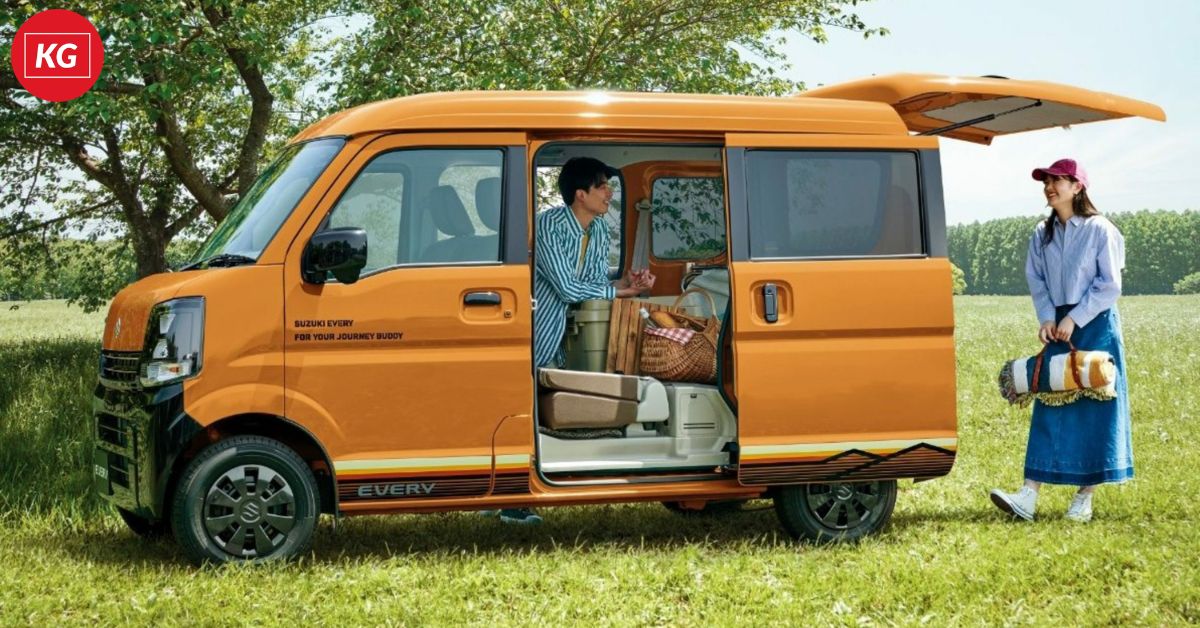
There is a distinct subculture of the automotive world that looks at Japan with an intense, burning sense of jealousy. It isn’t because of their pristine mountain driving roads or their legendary sports cars. No, the source of this envy is much smaller, boxier, and infinitely more practical: the Keijidōsha, or Kei car.
And right now, Japan has just rolled out a refreshed line of ultra-affordable workhorses that will make any fan of minimalist engineering drool. Daihatsu has officially updated its beloved Hijet Cargo and Atrai kei van lineup. Sporting a microscopic footprint, an optional manual gearbox, and a starting price of just ¥1,155,000 (roughly $7,200 USD), it’s a masterclass in what a modern utilitarian vehicle should be.
Let’s dive into why this little box on wheels is capturing hearts globally, and why the rest of the world is missing out.
What is a Kei Van, Anyway?
For the uninitiated, Kei vehicles are a specific class of tiny vehicles in Japan born out of post-WWII necessity. To qualify for cheaper tax rates and easier parking permits in densely packed cities, these vehicles must adhere to strict regulations.
By law, a Kei car cannot exceed 3.4 meters (11.2 feet) in length, and its engine is strictly capped at a tiny 660cc displacement with a maximum output of 64 horsepower.
The Daihatsu Hijet Cargo squeezes every ounce of utility out of these limitations. It maximizes interior volume by utilizing a flat-sided, cab-over design where the engine sits mid-mounted under the front seats. The result? A vehicle with the footprint of a golf cart but the cargo-hauling spirit of a much larger van.
Three Pedals and a Turbo: The Powertrain
In a world where the manual transmission is being systematically erased from existence, Daihatsu is keeping the dream alive for the working class.
The updated Hijet Cargo range features two flavors of its three-cylinder 660cc engine:
- Naturally Aspirated: Putting out a modest 46 horsepower.
- Turbocharged: Bumping power up to the legal limit of 63 horsepower.
While a Continuously Variable Transmission (CVT) is available for those who prefer a two-pedal commute, the real news is the availability of a tough-as-nails 5-speed manual transmission.
Power can be sent to the rear wheels, or, for those dealing with Japan’s heavy winter snows, an electronically controlled four-wheel-drive (4WD) system. A lightweight, turbo, manual, 4WD van? On paper, that sounds less like a delivery vehicle and more like the recipe for an incredibly fun, utilitarian sleeper.
Big Tech Upgrades in a Tiny Package
Don’t let the $7,200 entry price fool you. Just because it’s cheap doesn’t mean it’s primitive. The major focus of this mid-cycle refresh was ensuring these commercial vehicles meet stringent modern safety regulations.
Daihatsu has equipped the vans with an upgraded version of their Smart Assist active safety suite. Using a sophisticated mix of radar and cameras, this tiny van can now do things that many entry-level Western cars still struggle with:
- Bicycle Detection: Instantly spots cyclists crossing urban roadways.
- Intersection Monitoring: Detects oncoming traffic in the opposite lane when making right turns.
- Pedestrian Awareness: Tracks pedestrians mid-turn to apply autonomous braking if necessary.
Higher trim levels, like the lifestyle-oriented Atrai RS, swap out traditional analog dials for a digital instrument cluster dubbed the Active Multi Information Meter. While standard trims forgo an infotainment screen to keep costs rock-bottom, buyers can option 6.8-inch or 9-inch touchscreens complete with modern connectivity.
Ultimate Versatility: A Swiss Army Knife on Wheels
The brilliance of the Hijet lineup lies in its modularity. Daihatsu offers these vehicles as traditional two-seater cargo haulers, four-seater passenger vans, and wheelchair-accessible “Sloper” models.
There is even a “Deck Van” configuration, which cuts off the rear roofline to create a tiny, open pickup bed attached to an enclosed four-seater cabin. It is the ultimate hybrid vehicle for tradespeople who need to carry muddy tools but want their cabin to stay pristine.
Furthermore, the aftermarket scene for these vehicles is massive. Because the interior is essentially a blank canvas of flat metal and bolt holes, they are frequently converted into micro-campers. Throw a foldable mattress in the back, and you have a mobile bedroom ready for weekend overlanding.
Why Can’t We Have Nice (Small) Things?
The arrival of the refreshed Hijet highlights a frustrating gap in Western automotive markets. In regions like North America, commercial vans have ballooned into towering, expensive behemoths. If you are a small business owner, a local florist, or a mobile technician operating in a tight city center, your options are incredibly limited.
The Hijet Cargo offers a glimpse into an alternative reality: a brand-new, ultra-reliable, remarkably safe commercial vehicle that costs less than a used decade-old hatchback.
While strict safety and emissions export laws mean we won’t see these modern 2026 models roaming Western highways anytime soon, they remind us that sometimes, less truly is more. Until the laws change, we’ll just have to watch from afar—enviously eyeing Japan’s tiny, manual boxes of pure efficiency.














Leave a Reply