
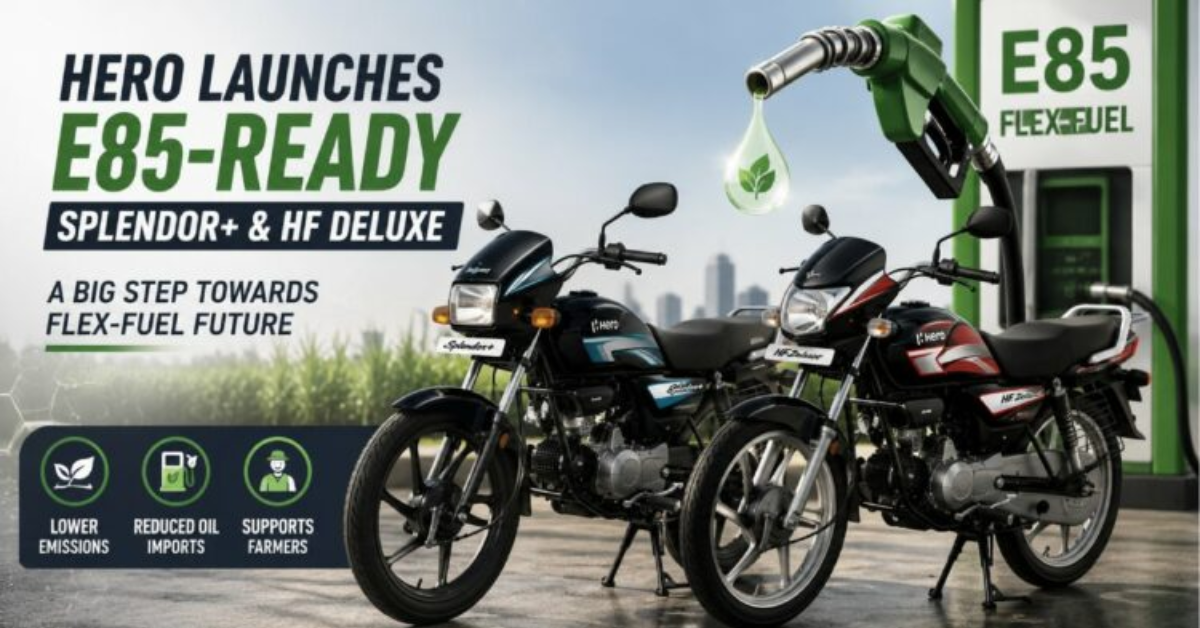
India’s two-wheeler market is on the verge of a major transformation. While electric vehicles continue to attract significant attention, another fuel technology is quietly emerging as a potential game-changer—ethanol-based mobility. In a move that could have long-term implications for the automotive and energy sectors, Hero MotoCorp has introduced E85-ready versions of its most popular commuter motorcycles, the Splendor+ and HF Deluxe.
For decades, these motorcycles have been the backbone of Indian transportation, serving millions of daily commuters, small business owners, rural riders, and families. By making these iconic models compatible with E85 fuel, Hero is not merely launching updated motorcycles—it is signaling the beginning of a new chapter in affordable and sustainable mobility.
The development has generated excitement across the automotive industry because of its potential impact on fuel costs, environmental sustainability, agricultural growth, and India’s long-term energy security.
Let’s explore what Hero’s E85-ready motorcycles bring to the market and why this move could reshape the future of the Indian two-wheeler industry.
Understanding E85 Fuel
Before discussing the motorcycles, it’s important to understand the fuel technology behind them.
E85 is a fuel blend containing approximately:
- 85% ethanol
- 15% petrol
Ethanol is produced from renewable agricultural sources such as sugarcane, corn, and biomass feedstocks.
Unlike conventional petrol, ethanol can be replenished through agricultural production, making it a renewable fuel source. This characteristic has made ethanol an increasingly attractive option for countries seeking cleaner transportation solutions and reduced dependence on imported fossil fuels.
Why Ethanol Matters for India
India is one of the world’s largest consumers of petroleum products.
A significant portion of the country’s fuel requirements comes from imported crude oil, exposing the economy to international price fluctuations.
The promotion of ethanol-based fuels offers several advantages:
Reduced Oil Imports
Greater ethanol adoption can reduce dependence on imported petroleum products.
Improved Energy Security
Domestic fuel production helps create a more resilient energy ecosystem.
Environmental Benefits
Ethanol contributes to lower emissions compared to conventional fossil fuels.
Agricultural Support
Increased ethanol demand can create additional revenue opportunities for farmers.
These benefits explain why ethanol has become a key component of India’s long-term energy strategy.
Why Splendor+ and HF Deluxe Are the Perfect Candidates
The choice of Splendor+ and HF Deluxe is particularly significant.
These motorcycles are among the most popular commuter bikes in India and have built their reputation on:
- Reliability
- Fuel efficiency
- Low maintenance costs
- Wide service support
- Affordable ownership
Because these models already enjoy widespread acceptance across urban and rural markets, they provide an ideal platform for introducing alternative fuel technology.
If ethanol mobility is to succeed at a mass-market level, it needs vehicles that ordinary consumers trust—and few motorcycles enjoy the trust that Splendor+ and HF Deluxe have earned.
What Makes an E85 Motorcycle Different?
Many riders may wonder how an E85-compatible motorcycle differs from a standard petrol-powered bike.
Special Fuel System Components
Ethanol behaves differently from petrol and requires specific engineering adjustments.
E85-ready motorcycles typically include:
- Corrosion-resistant fuel lines
- Ethanol-compatible seals
- Modified fuel tanks
- Specialized fuel injectors
These upgrades ensure durability and reliability over long-term usage.
Advanced Engine Calibration
The engine management system must be capable of adjusting fuel delivery according to ethanol content.
This allows the motorcycle to maintain:
- Smooth performance
- Efficient combustion
- Reliable starting
- Consistent power delivery
Optimized Combustion Characteristics
Engine tuning is specifically designed to maximize the benefits of ethanol-based fuels while preserving everyday usability.
Lower Running Costs Could Drive Adoption
One of the most attractive aspects of E85 fuel is its potential affordability.
For commuter motorcycle owners, fuel expenses represent a major portion of ownership costs.
Daily Commuters Benefit Most
Millions of riders use their motorcycles for:
- Office commutes
- Business activities
- Delivery services
- Educational travel
- Rural transportation
Even modest reductions in fuel expenses can generate substantial annual savings.
Commercial Users Gain Additional Advantages
Businesses that operate multiple two-wheelers may experience:
- Lower operational costs
- Improved profitability
- Reduced transportation expenses
This could encourage faster adoption among commercial users.
Environmental Benefits of E85 Motorcycles
As concerns regarding climate change and urban pollution continue growing, cleaner transportation solutions have become increasingly important.
Lower Carbon Emissions
Ethanol is considered a renewable fuel because it originates from plant-based sources.
Its use can contribute to lower lifecycle greenhouse gas emissions.
Cleaner Combustion
Ethanol burns more cleanly than conventional petrol, potentially reducing harmful pollutants.
Sustainable Transportation
The introduction of E85-compatible motorcycles supports broader efforts to create environmentally responsible mobility systems.
These benefits align closely with India’s sustainability objectives.
A Major Boost for Indian Farmers
One of the most overlooked aspects of ethanol adoption is its connection to agriculture.
Increased Demand for Agricultural Products
Ethanol production relies heavily on crops such as:
- Sugarcane
- Corn
- Biomass feedstocks
As ethanol demand rises, agricultural producers could benefit from expanded market opportunities.
Strengthening Rural Economies
Additional demand for agricultural feedstocks can:
- Increase farmer income
- Create rural employment opportunities
- Support local industries
This creates a valuable link between transportation and agricultural development.
What This Means for the Two-Wheeler Industry
Hero’s move could have far-reaching consequences beyond its own product lineup.
Industry-Wide Innovation
Competitors may accelerate development of their own flex-fuel motorcycles.
This could lead to:
- More product launches
- Increased research investment
- Faster technological advancement
Expansion of Alternative Fuel Technologies
The success of E85 motorcycles may encourage exploration of additional alternative fuel solutions.
Greater Consumer Awareness
As major brands introduce ethanol-compatible vehicles, public awareness regarding alternative fuels is likely to increase significantly.
Infrastructure Remains a Key Challenge
Despite the potential benefits, widespread adoption depends on infrastructure development.
Availability of E85 Fuel
Consumers need convenient access to ethanol fuel stations.
Without adequate fuel availability, adoption rates may remain limited.
Distribution Network Expansion
Fuel suppliers must invest in:
- Storage systems
- Transportation networks
- Retail infrastructure
to support nationwide availability.
Consumer Education
Many riders remain unfamiliar with ethanol technology.
Manufacturers and policymakers will need to educate consumers regarding:
- Benefits
- Usage requirements
- Long-term advantages
Could Ethanol Compete with Electric Vehicles?
One of the most interesting questions surrounding E85 motorcycles is their relationship with electric mobility.
Different Solutions for Different Needs
Electric vehicles offer:
- Zero tailpipe emissions
- Low operating costs
- Quiet operation
However, they also require charging infrastructure and higher initial investments in many cases.
Ethanol Offers Immediate Compatibility
Flex-fuel vehicles can leverage much of the existing fuel distribution ecosystem while reducing fossil fuel dependence.
This makes ethanol a practical transitional solution.
Complementary Technologies
Rather than competing directly, electric and ethanol technologies may coexist as part of a broader sustainable mobility ecosystem.
Why Hero’s Move Matters More Than Most Launches
The significance of Hero’s E85-ready motorcycles extends beyond product innovation.
The company dominates the commuter motorcycle segment, meaning its decisions often influence broader industry trends.
When a market leader embraces new technology, it sends a strong signal regarding future industry direction.
The introduction of E85-compatible Splendor+ and HF Deluxe models suggests that ethanol mobility is moving from experimental concepts toward mainstream adoption.
Future Outlook
The launch of E85-ready commuter motorcycles could trigger several developments in the coming years:
- More flex-fuel two-wheelers
- Expansion of ethanol fuel stations
- Increased ethanol production
- Greater government support
- Improved fuel affordability
- Wider consumer acceptance
If these developments occur simultaneously, India could become one of the world’s leading markets for ethanol-powered transportation.
Conclusion
Hero MotoCorp’s decision to introduce E85-ready versions of the Splendor+ and HF Deluxe represents a landmark moment for India’s mobility sector. By combining trusted commuter motorcycles with advanced flex-fuel technology, the company is making alternative fuels more accessible to everyday riders.
The potential benefits are substantial—lower fuel costs, reduced emissions, greater energy security, and stronger support for India’s agricultural economy. While challenges related to infrastructure and consumer awareness remain, the move demonstrates growing confidence in ethanol’s role within the future transportation ecosystem.
As India continues pursuing cleaner and more sustainable mobility solutions, Hero’s E85-ready motorcycles may be remembered as the products that brought ethanol technology into the mainstream. For millions of riders across the country, this could mark the beginning of a more affordable, environmentally responsible, and future-ready era of two-wheeler transportation.







Leave a Reply