
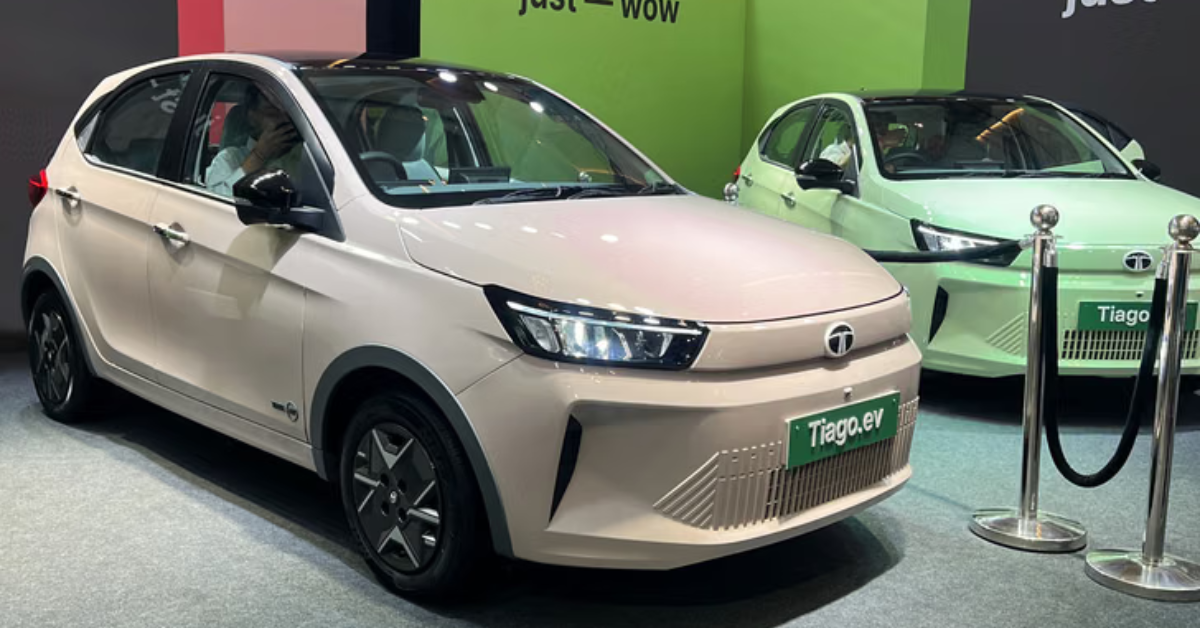
Tata Motors is preparing for a major expansion in electric vehicle production as demand for EVs continues to rise rapidly across India. The company plans to increase its electric vehicle manufacturing capacity by nearly 50 percent, signaling strong confidence in the future of sustainable mobility and India’s growing EV market.
Over the past few years, Tata Motors has emerged as one of the leading players in India’s electric passenger vehicle segment. With multiple EV models already available in the market and several new products under development, the company is aggressively strengthening its position in the country’s evolving automotive industry.
The production increase reflects changing consumer preferences, rising fuel prices, government support for cleaner transportation, and growing awareness regarding sustainable mobility solutions.
As electric vehicles become more mainstream, Tata Motors is focusing on scaling operations, improving battery technology, expanding charging support, and introducing next-generation EV platforms.
India’s Electric Vehicle Market is Growing Rapidly
The Indian automobile industry is currently undergoing one of its biggest transformations in decades. Electric mobility is no longer considered a niche segment, as more buyers are now actively considering EVs for daily commuting and family usage.
Several factors are contributing to the rapid rise in EV demand:
- Rising petrol and diesel prices
- Government incentives for EV adoption
- Improved charging infrastructure
- Lower running costs
- Environmental awareness
- Better battery technology
- Growing availability of electric cars
Urban buyers, office commuters, and younger customers are increasingly shifting toward electric vehicles because of their affordability in long-term ownership and eco-friendly nature.
Tata Motors has recognized this shift early and has invested heavily in expanding its electric vehicle portfolio.
Tata Motors Strengthens EV Leadership in India
Tata Motors has played a major role in popularizing electric passenger vehicles in India.
The company’s EV lineup has attracted buyers looking for:
- Affordable electric mobility
- Practical driving range
- Modern technology
- Lower maintenance costs
- Premium features
- Safer vehicles
Tata’s electric cars have become popular among city users because they offer a balance between affordability, comfort, and practicality.
The company’s early focus on electric mobility has allowed it to establish a strong presence in the EV segment before many competitors entered aggressively.
Increasing production capacity by 50 percent highlights Tata’s ambition to maintain leadership as competition intensifies in the Indian EV market.
Why Tata Motors is Increasing EV Production
The decision to increase electric vehicle production is mainly driven by growing customer demand.
Tata Motors has witnessed rising interest in EVs across multiple customer categories including:
- Urban professionals
- Young buyers
- Tech-focused consumers
- Family users
- Corporate fleet operators
Many customers now consider EVs as practical daily-use vehicles rather than experimental technology.
The demand for electric SUVs and hatchbacks has increased significantly in metro cities as charging infrastructure improves and buyers become more comfortable with EV ownership.
To reduce waiting periods and meet future demand, Tata Motors is expanding manufacturing capabilities and improving production efficiency.
Expansion of EV Manufacturing Facilities
To support higher production targets, Tata Motors is expected to expand and modernize its manufacturing facilities.
The company is likely focusing on:
- Advanced battery assembly lines
- Smart manufacturing systems
- EV-focused production platforms
- Automation technologies
- Supply chain optimization
- Battery pack integration systems
Modern EV production requires specialized manufacturing processes because electric vehicles use completely different architectures compared to conventional petrol and diesel cars.
Tata Motors is investing heavily in advanced production infrastructure to improve efficiency, quality, and scalability.
Battery Technology Remains a Key Focus
Battery technology is one of the most important aspects of electric vehicles.
Tata Motors continues investing in:
- Improved battery efficiency
- Faster charging capability
- Better thermal management
- Longer driving range
- Battery safety systems
- Cost optimization
As battery technology improves, EVs are becoming more practical for Indian driving conditions.
Consumers today expect:
- Longer range
- Faster charging
- Better durability
- Affordable ownership
Tata’s future EV development strategy will likely focus heavily on addressing these customer expectations.
Advancements in battery technology will also help reduce EV prices in the future, making electric cars accessible to a larger population.
Charging Infrastructure Expanding Across India
One of the biggest challenges for EV adoption in India has been charging infrastructure. However, the situation is improving rapidly.
Charging stations are now expanding across:
- Metro cities
- Highways
- Shopping malls
- Residential areas
- Office complexes
- Public parking zones
Tata Motors has also been actively supporting charging infrastructure development to improve customer confidence in EV ownership.
As charging availability improves, range anxiety among buyers is gradually decreasing.
This infrastructure growth is playing a major role in increasing demand for electric vehicles across the country.
Government Support Accelerates EV Adoption
Government policies have significantly contributed to the growth of electric mobility in India.
Authorities continue supporting EV adoption through:
- Subsidies
- Tax benefits
- Manufacturing incentives
- Reduced registration costs
- Infrastructure investments
- Sustainability initiatives
These policies encourage both manufacturers and consumers to transition toward cleaner transportation solutions.
Tata Motors is benefiting from the favorable policy environment while also helping India move toward its long-term sustainability goals.
Future EV Models Under Development
Tata Motors is not only increasing production but also preparing multiple future electric vehicles for the Indian market.
The company is expected to focus on:
- Electric SUVs
- Affordable EV hatchbacks
- Premium electric crossovers
- Long-range EVs
- Advanced connected vehicles
Future Tata EVs are likely to offer:
- Larger battery packs
- Modern interiors
- AI-based connected technology
- Advanced safety systems
- Faster charging support
The company aims to expand its EV portfolio across different price segments to attract a broader customer base.
Growing Competition in the EV Segment
The Indian EV market is becoming increasingly competitive as several manufacturers enter the electric mobility space.
Competition areas include:
- Driving range
- Battery efficiency
- Pricing
- Charging speed
- Technology features
- Connected systems
- Design innovation
Despite growing competition, Tata Motors currently enjoys strong brand recognition in India’s passenger EV market.
The company’s early-mover advantage and established customer trust continue to strengthen its position.
However, increasing competition will push manufacturers to improve technology and pricing further in the coming years.
EVs Are Changing the Future of Mobility
Electric vehicles are gradually reshaping the global automobile industry.
Compared to traditional petrol and diesel cars, EVs offer:
- Lower running costs
- Reduced emissions
- Quiet driving experience
- Instant torque delivery
- Lower maintenance requirements
As battery prices decline and infrastructure improves, EVs are expected to become more mainstream globally.
India’s transition toward electric mobility is still in the developing stage, but growth rates suggest strong future potential.
Tata Motors appears determined to remain at the center of this transformation.
Economic and Environmental Impact
Increasing EV production also contributes positively to:
- Job creation
- Battery manufacturing growth
- Renewable energy adoption
- Reduced fuel dependency
- Lower urban pollution
Electric mobility is becoming an important part of India’s long-term environmental and industrial strategy.
Automobile manufacturers investing in EV technology are likely to play a major role in shaping future transportation systems.
Tata Motors’ production expansion reflects growing confidence in India’s electric mobility ecosystem.
Final Verdict
Tata Motors’ plan to increase electric vehicle production by 50 percent highlights the massive growth potential of India’s EV market.
The company’s aggressive expansion strategy shows strong confidence in rising consumer demand, improving charging infrastructure, and the future of sustainable transportation.
By investing in advanced battery technology, manufacturing capacity, and next-generation electric vehicles, Tata Motors is positioning itself as one of the leading forces in India’s automotive transformation.
As more customers shift toward cleaner and cost-effective mobility solutions, Tata Motors’ growing EV portfolio is expected to play a major role in shaping the future of transportation in India.
The upcoming years could become a turning point for the Indian automobile industry, and Tata Motors appears ready to lead that electric revolution.












Leave a Reply