
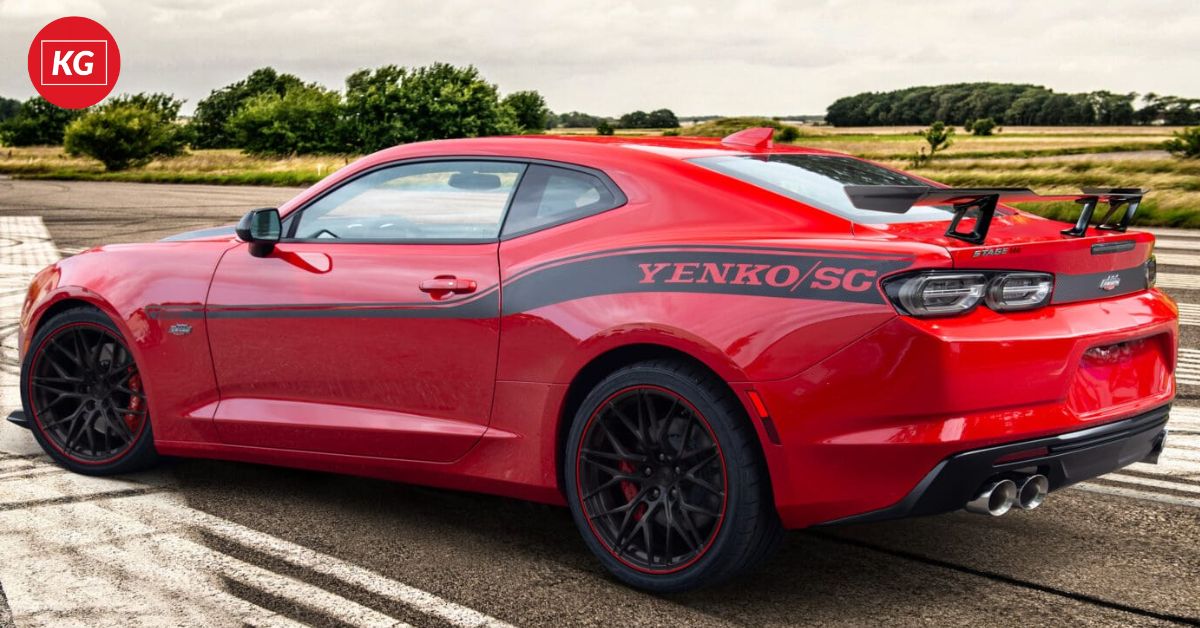
Few names in American muscle car history carry the same weight as Yenko/SC. Originally known for transforming Camaros, Novas, and Chevelles into street-legal monsters in the late 1960s and 70s, Yenko has become synonymous with raw performance. Today, under Specialty Vehicle Engineering (SVE), the Yenko badge continues to thrive—this time by taking on the modern Corvette E-Ray. The result? A hybrid beast that retains its electric motor while delivering more power than a Bugatti Chiron.
The Base: Corvette E-Ray
The Corvette E-Ray itself is already groundbreaking. Introduced as Chevrolet’s first hybrid Corvette, it combines a 6.2-liter LT2 V8 with an electric motor on the front axle, producing all-wheel drive capability. While the stock E-Ray is praised for its balance of performance and usability, it wasn’t considered a hypercar rival—until Yenko stepped in.
Yenko/SC Transformation
SVE’s Stage III Yenko/SC Twin Turbocharged Corvette E-Ray is a radical reimagining of the hybrid platform.
- Twin Turbo Setup: A pair of 58 mm Garrett turbochargers boost the LT2 V8.
- Retained Electric Motor: Unlike many tuners who strip hybrid systems, Yenko/SC retains the E-Ray’s standard electric motor, ensuring AWD capability and instant torque.
- Power Output: The result is a staggering 1,564 horsepower, surpassing the Bugatti Chiron’s 1,479 hp.
- Hybrid Advantage: The combination of electric assist and turbocharged V8 power makes it one of the most versatile performance cars ever built.
Performance & Driving Dynamics
The Yenko/SC E-Ray isn’t just about headline numbers—it’s engineered for real-world performance.
- Acceleration: With AWD and electric torque fill, launches are brutally quick yet controlled.
- Handling: The hybrid system improves traction, making it more usable than traditional rear-wheel-drive supercars.
- Daily Usability: Despite its extreme output, the E-Ray platform remains comfortable enough for street use, a hallmark of Corvette engineering.
Design & Exclusivity
While the mechanical upgrades steal the spotlight, Yenko ensures the car looks the part.
- Exterior Enhancements: Subtle Yenko badging and aerodynamic tweaks distinguish it from stock E-Rays.
- Interior Touches: Custom trim and numbered plaques highlight its exclusivity.
- Limited Production: As with all Yenko builds, production numbers are low, ensuring rarity and collectibility.
Why “Retains” Matters
The phrase “Yenko/SC retains” refers to the decision to keep the E-Ray’s electric motor intact. This is significant because:
- It preserves the hybrid identity of the car.
- It allows AWD capability, making the car more versatile than traditional muscle builds.
- It demonstrates that electrification can enhance, not dilute, performance.
This choice reflects a broader trend in performance engineering: embracing hybrid technology as a tool for greater speed and control.
Pros & Cons
| Pros | Cons |
|---|---|
| 1,564 hp—more than a Bugatti Chiron | Extremely limited availability |
| AWD hybrid system retained | Likely very high cost |
| Usable on the street despite hypercar power | Maintenance complexity |
| Iconic Yenko heritage | Purists may prefer non-hybrid builds |
Verdict
The Yenko/SC Corvette E-Ray represents a bold fusion of old-school muscle car tuning and modern hybrid technology. By retaining the electric motor, SVE has created a machine that doesn’t just chase hypercars—it outmuscles them. It’s a turning point for the Yenko nameplate, proving that American performance can evolve without losing its soul.
For enthusiasts, it’s a dream: a Corvette with the usability of a hybrid, the heritage of Yenko, and the power to humble Europe’s finest.


Leave a Reply