
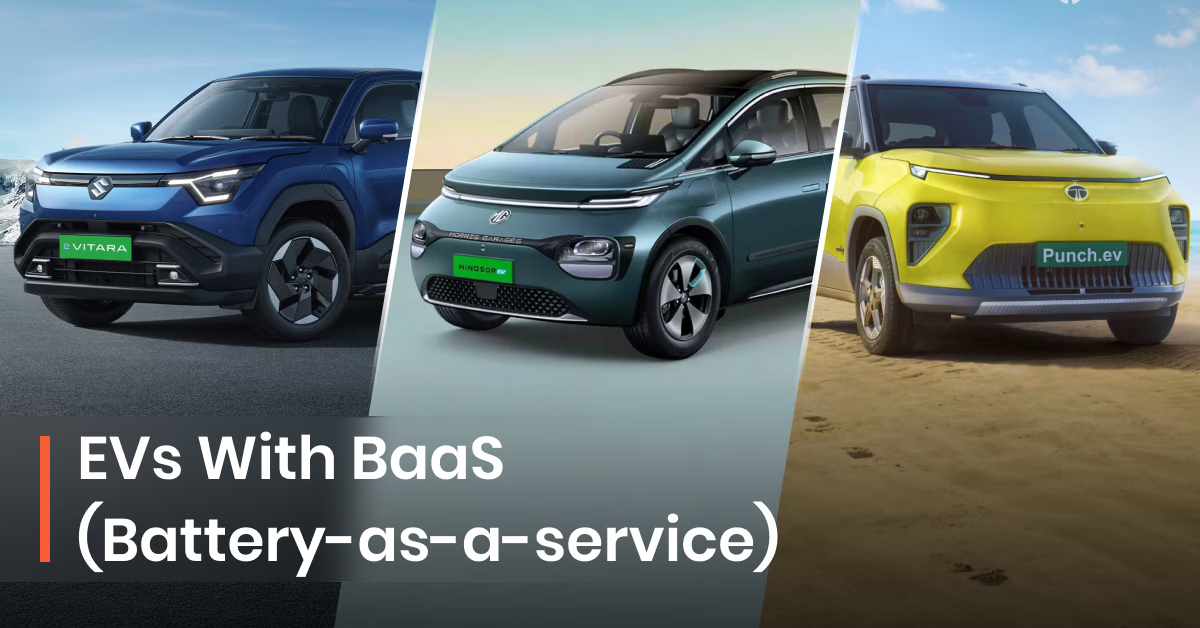
India’s electric vehicle revolution is accelerating—but range anxiety and high upfront battery costs remain key buyer concerns. Enter Battery as a Service (BaaS): a smart pricing model that separates the battery cost from the vehicle, offering lower upfront prices, flexible battery plans, and easier access to EV ownership.
As EV adoption grows, several manufacturers in India are embracing BaaS. Leading the movement is MG Motor India, followed closely by new offerings from Tata Motors and Maruti Suzuki. In this detailed guide, we break down the BaaS EV landscape, pricing structures, benefits, and how this model is reshaping the EV segment in India.
What Is BaaS (Battery as a Service)?
Before diving into the list, let’s understand why BaaS matters.
Traditionally, EVs bundle the battery with the vehicle price, making EVs significantly more expensive than comparable ICE models. BaaS changes this:
- Battery cost is separate from vehicle cost
- Buyers pay a monthly subscription or lease for the battery
- EV price becomes more affordable upfront
- Battery upgrades and replacements become simpler
- Reduces concerns about battery degradation
This model lowers financial barriers and enhances EV affordability — crucial in India where price sensitivity is high.
Why BaaS Is a Game Changer in India
India’s EV market is price-sensitive but quickly evolving. BaaS delivers:
- Lower upfront cost — makes EVs competitive with petrol/diesel cars
- Flexible subscriptions — monthly plans based on range preference
- Better resale value — battery liability reduces ownership risk
- Battery upgrades — easier access to newer batteries in future
- Reduced anxiety about battery life
With expanding charging infrastructure and government incentives, BaaS can accelerate EV adoption, especially among urban and budget buyers.
1. MG ZS EV – Pioneering BaaS Leadership
At the forefront of BaaS in India is MG ZS EV, one of the most popular electric SUVs in the country. MG introduced BaaS to make its EV more accessible to buyers who hesitate at the high battery cost.
Key Highlights:
- Strong brand presence in EV segment
- Flexible battery plans that significantly lower upfront price
- Competitive range and performance
- Premium features and safety
With BaaS, customers can choose battery capacity based on needs — whether daily city commuting or long-distance travel — without paying the full cost upfront. This flexibility has helped MG maintain dominance in the price-competitive BaaS EV market.
2. Tata EVs With BaaS – Expanding Accessibility
India’s largest automaker, Tata Motors, has also joined the BaaS wave. Various upcoming and current Tata EVs are expected to offer battery-leasing options to broaden appeal.
Tata’s EV portfolio includes several high-profile models designed for mass market adoption. With BaaS, these EVs become even more attractive:
What Tata Brings to BaaS:
- Affordable EV entry prices with smart battery plans
- Diverse vehicle options across segments
- Strong after-sales and service network
- Enhanced resale confidence with lease battery model
Tata’s extensive dealer presence and customer trust give it an edge in popularizing BaaS. By pairing competitive pricing with practical features, Tata’s BaaS EVs are set to attract both first-time EV buyers and value-conscious customers.
3. Maruti EVs With BaaS – Mass Adoption Strategy
As India’s highest-selling carmaker, Maruti Suzuki is entering the EV space with BaaS priced models to democratize electric mobility. While Maruti’s EV portfolio is still emerging, the company is expected to integrate BaaS in its launches to amplify appeal among budget and urban buyers.
Maruti’s BaaS Strengths:
- Affordable EV ecosystem focus
- Large service network across India
- Practical EV solutions for daily driving
- Competitive maintenance plans
For a brand known for value, reliability and low ownership costs, BaaS aligns perfectly with Maruti’s customer-centric strategy. By decoupling battery costs, Maruti can offer EVs at attractive starting prices, encouraging wider adoption.
BaaS Pricing – Understanding the Economics
BaaS pricing typically involves:
- Lower vehicle purchase price (battery excluded)
- Monthly battery subscription fee
- Flexible plans based on battery capacity and range
- Optional upgrade paths for better range or performance
Example Pricing Structure:
| Component | Traditional EV | BaaS EV |
|---|---|---|
| Vehicle Cost | Includes full battery | Lower without battery |
| Battery Cost | Paid upfront | Monthly subscription |
| Monthly Cost | N/A | Subscription fee |
| Ownership Risk | Battery deterioration impact | Lower with service plans |
BaaS makes EV ownership more predictable and cost-effective, especially for urban users with daily commuting patterns.
Benefits of BaaS – Beyond Pricing
Beyond lower costs, BaaS also delivers:
Enhanced Flexibility
Buyers can choose plans based on usage:
- Daily city driving
- Longer highway trips
- Seasonal needs
Battery Upgrades
As technology improves, users can upgrade to higher capacity packs — future-proofing their EV without buying a new car.
Reduced Depreciation
Battery lease removes a major depreciation factor from the car’s book value, enhancing resale prospects.
Simplified Support
Manufacturers handle battery maintenance and replacements — a major convenience for owners.
Challenges and Considerations
While BaaS offers significant advantages, it also comes with certain considerations:
Subscription Commitment
Monthly fees may feel like a recurring expense for some buyers.
Range Limitations
Lower-tier battery plans may offer less range, requiring careful planning for long drives.
Charging Infrastructure
Despite improvements, charging infrastructure still varies by city — impacting battery usage patterns.
Policy Dynamics
Government incentives and local policies can influence BaaS adoption — though overall trends are positive.
How BaaS Shapes India’s EV Future
BaaS is more than a pricing strategy — it is a market amplifier. By lowering initial costs and aligning battery ownership with user needs, BaaS makes EVs accessible to:
- Young professionals
- Urban families
- First-time car buyers
- Budget-focused customers
- Fleet and commercial users
India’s charging ecosystem continues to grow, and with BaaS in place, EV adoption is set to accelerate rapidly across cities and towns.
Looking Ahead: Next Generation BaaS EVs
With improving battery tech, smarter energy management systems, and evolving customer preferences, future BaaS EVs in India could offer:
- Dynamic subscription plans
- Battery swap stations
- AI-optimized battery usage
- Seamless over-the-air updates
- Better aftermarket support
As more automakers adopt BaaS, competition will increase — leading to improved features, wider network access, and value-driven offerings.
Final Thoughts: BaaS Is Redefining EV Affordability
Battery as a Service is emerging as one of the most impactful transformations in India’s EV market. With MG leading the way, followed by Tata’s diverse portfolio and Maruti’s mass-market push, BaaS makes EVs more affordable, accessible and flexible.
If you’re considering an EV purchase, BaaS priced models deserve careful consideration — especially if you value:
- Lower upfront investment
- Predictable monthly costs
- Future battery upgrades
- Strong brand after-sales support
- Enhanced resale prospects
BaaS is not just a pricing model — it’s the key that may unlock mass adoption of electric vehicles in India’s rapidly evolving automotive landscape.








Leave a Reply