
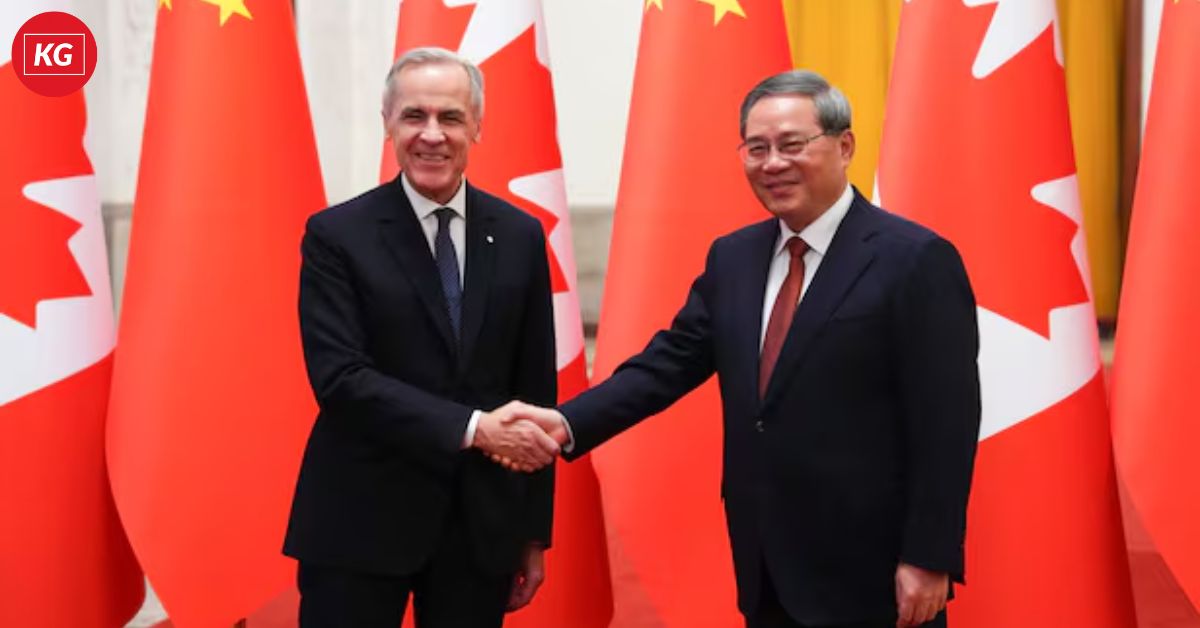
Diplomatic relations between Canada and China have been turbulent over the past decade, marked by trade disputes, geopolitical tensions, and diverging strategic interests. Against this backdrop, Prime Minister Mark Carney’s four-day visit to Beijing from January 14–17, 2026 is being closely watched worldwide. It is the first Canadian prime ministerial visit to China since 2017, signaling Ottawa’s intent to re-engage with Beijing on critical issues ranging from trade to climate change.
Significance of the Visit
- First in eight years: Carney’s trip breaks a long freeze in high-level exchanges.
- Strategic reset: Both sides are expected to use the visit to recalibrate relations.
- Global context: With rising U.S.-China tensions, Canada’s approach could influence broader Western strategies.
Chinese officials have emphasized the importance of the visit, noting that President Xi Jinping will personally meet Carney to provide “new strategic guidance” for bilateral ties.
Key Agendas
1. Trade and Investment
- Canada seeks to diversify its trade beyond the U.S., and China remains a massive market for Canadian goods such as agriculture, energy, and technology.
- Discussions are expected on reducing barriers for Canadian exporters and addressing concerns about Chinese subsidies and overcapacity.
- Carney’s background as a former central banker may help frame talks around financial cooperation and investment flows.
2. Climate and Clean Energy
- Both countries are committed to climate goals, and cooperation in clean energy technologies, EVs, and carbon markets could be a major outcome.
- Canada’s recent tariffs on Chinese EVs and steel complicate the picture, but Carney may seek balanced solutions that protect Canadian industries while encouraging green collaboration.
3. Geopolitical and Security Issues
- Sensitive topics such as human rights, cybersecurity, and Indo-Pacific security are likely to be raised.
- Canada must balance its Western alliances with its desire to maintain constructive ties with Beijing.
Meetings and Engagements
During the visit, Carney will:
- Meet President Xi Jinping for strategic discussions.
- Hold talks with Premier Li Qiang on trade and economic cooperation.
- Engage with Zhao Leji, Chairman of the National People’s Congress Standing Committee, for legislative and institutional exchanges.
- Participate in business forums and cultural events to strengthen people-to-people ties.
Challenges Ahead
While the visit is promising, several challenges loom:
- Trust deficit: Past disputes, including the detention of Canadians in China and trade restrictions, have strained relations.
- Domestic skepticism: Canadian public opinion remains cautious about deepening ties with Beijing.
- Global pressures: Canada must navigate its commitments to allies like the U.S. while pursuing independent engagement with China.
Potential Outcomes
- Trade deals: Agreements to boost Canadian exports in agriculture and energy.
- Climate cooperation: Joint initiatives on clean energy and emissions reduction.
- Diplomatic thaw: A framework for more regular high-level exchanges.
Even modest progress would mark a significant step forward after years of stagnation.
Conclusion
Prime Minister Mark Carney’s visit to China is more than a diplomatic trip—it is a test of Canada’s ability to balance economic opportunity with geopolitical caution. By engaging directly with Chinese leadership, Carney is signaling Canada’s willingness to reset relations while safeguarding national interests. The outcomes of this visit could shape not only Canada-China ties but also the broader dynamics of Western engagement with Beijing in the years ahead.











Leave a Reply