
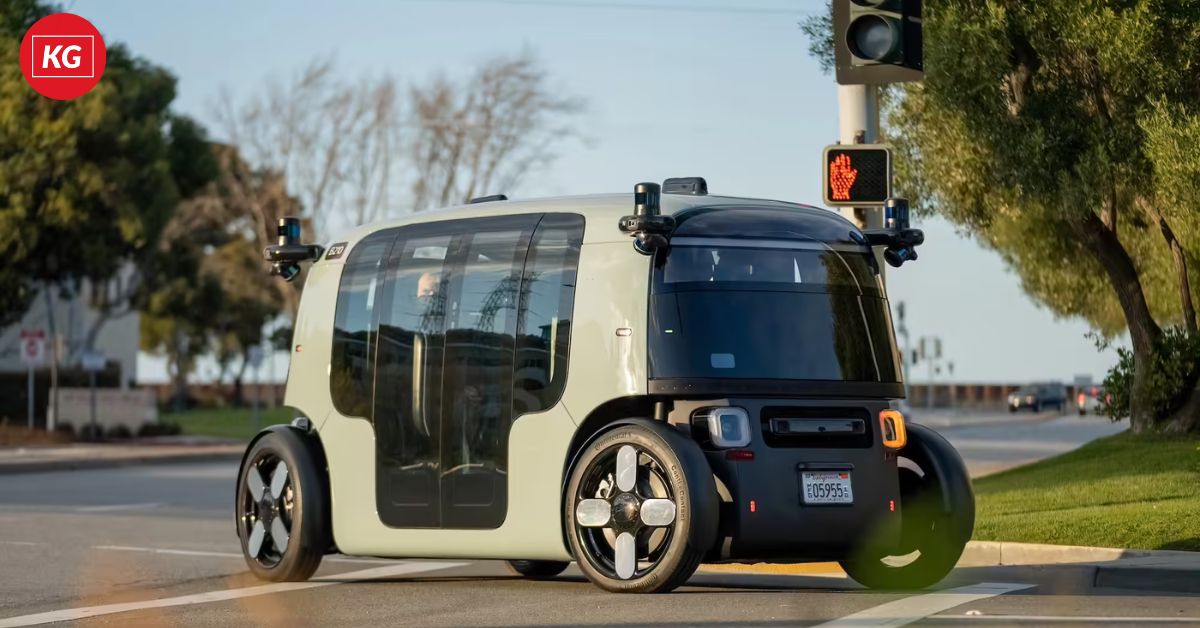
The race to dominate autonomous ride‑hailing is heating up, and Amazon’s Zoox is emerging as one of the most intriguing contenders. While companies like Waymo and Tesla have captured headlines, Zoox has quietly built a purpose‑designed robotaxi from the ground up—one that doesn’t just retrofit existing cars but reimagines what urban mobility can look like. With its recent milestones in production and public testing, Zoox is positioning itself as a game‑changer in the robotaxi revolution.
A Purpose‑Built Design
Unlike competitors who adapt existing vehicles, Zoox has engineered its robotaxi from scratch. The vehicle is symmetrical, bidirectional, and compact, designed specifically for dense urban environments. There’s no driver’s seat, steering wheel, or traditional front and back. Instead, passengers sit facing each other in a lounge‑style cabin, creating a social and futuristic experience.
This design isn’t just aesthetic—it’s functional. By eliminating the need for a driver, Zoox maximizes interior space while reducing complexity. The vehicle’s four‑wheel steering and compact footprint allow it to maneuver effortlessly through tight city streets, making it ideal for congested areas like San Francisco or Las Vegas.
Production Milestones
In June 2025, Amazon’s Zoox opened its first major robotaxi production facility in Hayward, California, a 220,000‑square‑foot plant capable of producing up to 10,000 robotaxis per year. This marked a critical transition from prototype testing to scalable manufacturing.
The facility complements Zoox’s existing assembly warehouse in Fremont, signaling Amazon’s commitment to mass deployment. By investing in large‑scale production, Zoox is preparing to compete head‑to‑head with Waymo, which already operates in 26 markets, and Tesla, which has begun limited robotaxi services.
Public Testing and Rollout
Zoox began offering free driverless rides to the public in Las Vegas and select San Francisco neighborhoods in 2025. These pilot programs allow the company to gather real‑world data, refine its systems, and build consumer trust. Paid rides are expected to launch in Las Vegas soon, with expansion into other cities on the horizon.
Early riders have praised the vehicle’s comfort and futuristic feel, noting that the absence of a driver changes the dynamic of the ride. For Amazon, this rollout is more than a test—it’s a statement that Zoox is ready to move beyond the lab and into everyday life.
Technology and Safety
Safety is paramount in autonomous vehicles, and Zoox has invested heavily in redundant systems. Each robotaxi is equipped with multiple LiDAR sensors, cameras, and radar units, providing a 360‑degree view of the environment. The vehicle’s bidirectional design ensures it can quickly reverse direction without complex maneuvers, enhancing safety in unpredictable urban scenarios.
Zoox also emphasizes sustainability. The robotaxi is fully electric, aligning with Amazon’s broader climate goals and commitment to reducing carbon emissions. By combining autonomy with electrification, Zoox addresses two of the biggest challenges in modern transportation: congestion and pollution.
Market Impact and Competition
Amazon’s entry into the robotaxi market through Zoox is significant. With its vast resources, logistics expertise, and e‑commerce ecosystem, Amazon can integrate Zoox into a broader mobility strategy. Imagine robotaxis not only transporting passengers but also delivering packages during off‑peak hours.
Competitors like Waymo and Tesla have their own strengths—Waymo with its extensive testing and Tesla with its massive fleet of consumer vehicles—but Zoox’s purpose‑built design and Amazon backing give it a unique edge. Analysts see Zoox as a serious disruptor, capable of reshaping how people and goods move through cities.
Challenges Ahead
Despite its promise, Zoox faces hurdles. Regulatory approval remains complex, with each city and state imposing different requirements for autonomous vehicles. Public acceptance is another challenge—many riders still feel uneasy about driverless cars.
Cost is also a factor. While Zoox’s production facility aims for scale, building 10,000 robotaxis per year is ambitious. Ensuring affordability while maintaining safety and reliability will be critical to widespread adoption.
The Bigger Picture
The robotaxi boom of 2025 has shown that autonomous mobility is no longer science fiction. With Waymo expanding globally, Tesla experimenting with branded services, and Zoox entering production, the industry is at an inflection point.
Amazon’s Zoox stands out because it doesn’t just adapt—it innovates. By rethinking the vehicle from the ground up, Zoox offers a glimpse into a future where cars are no longer designed around drivers but around passengers and communities.
Final Thoughts
The Amazon Zoox robotaxi represents a bold vision for the future of transportation. With its purpose‑built design, scalable production, and public rollout, Zoox is poised to challenge incumbents and redefine urban mobility.
As cities grapple with congestion, pollution, and safety concerns, Zoox offers a solution that is not only futuristic but practical. Backed by Amazon’s resources, Zoox could become more than just a ride‑hailing service—it could be the foundation of a new mobility ecosystem.













Leave a Reply