
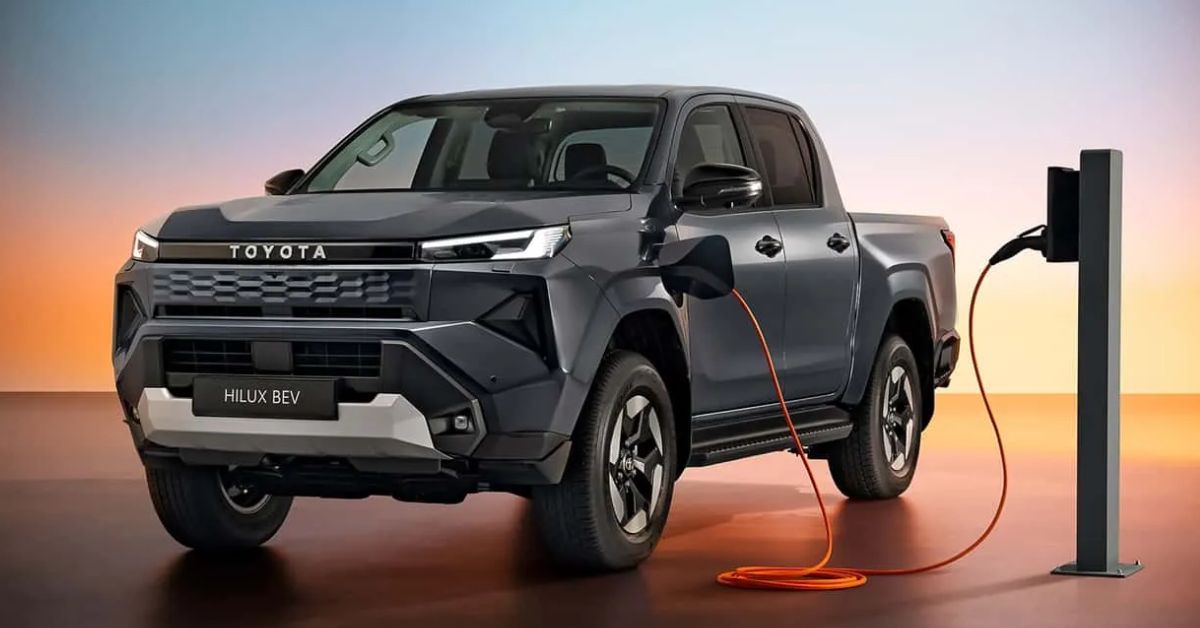
The Toyota Hilux has long been a symbol of durability, toughness, and reliability. From construction sites to rugged off-road trails, the Hilux has earned its reputation as one of the most dependable pickup trucks in the world. Now, Toyota is preparing to take this legendary nameplate into the future with the Hilux BEV (Battery Electric Vehicle). This marks a significant milestone, as Toyota blends its heritage of rugged utility with the demands of modern sustainability.
🌟 Introduction: Why the Hilux BEV Matters
The Hilux is more than just a pickup—it’s a global workhorse trusted by millions. By electrifying it, Toyota is addressing two critical needs:
- Sustainability: Reducing emissions in a segment traditionally dominated by diesel engines.
- Innovation: Proving that electric drivetrains can deliver the same toughness and reliability as internal combustion engines.
The Hilux BEV is not just about keeping up with trends—it’s about redefining what a pickup can be in the age of electrification.
⚡ Powertrain and Performance
While Toyota has not yet revealed full specifications, early prototypes and announcements suggest:
- Battery Pack: Expected to be around 70–80 kWh, offering a balance between range and payload capacity.
- Range: Approximately 250–300 km per charge, optimized for urban and semi-urban use.
- Motor Output: Likely to deliver 200–250 hp, with instant torque for hauling and towing.
- Drivetrain: Rear-wheel drive and all-wheel drive options anticipated, ensuring versatility across markets.
- Charging: Fast-charging capability to replenish 20–80% in under an hour, plus home charging solutions.
This setup ensures that the Hilux BEV can handle both daily commutes and demanding work environments.
🚘 Design and Utility
Toyota has emphasized that the Hilux BEV will retain the rugged DNA of its predecessors:
- Exterior: Familiar tough styling with modern EV cues, such as a closed grille and aerodynamic touches.
- Payload and Towing: Designed to match or exceed the capabilities of diesel Hilux models, making it practical for businesses and individuals alike.
- Durability: Reinforced chassis and suspension to handle heavy loads and rough terrains.
The Hilux BEV is not just a lifestyle vehicle—it’s a serious work tool that happens to be electric.
🛋️ Interior and Features
Inside, the Hilux BEV will combine practicality with modern technology:
- Infotainment: Large touchscreen with Toyota’s latest connected car system.
- Digital Cluster: Displays range, charging status, and energy flow.
- Comfort: Ergonomic seating, climate control, and noise reduction thanks to the silent EV drivetrain.
- Safety: Advanced driver assistance systems (ADAS), including lane-keeping assist, adaptive cruise control, and collision avoidance.
These features make the Hilux BEV not only tough but also comfortable and safe for long journeys.
🌍 Market Position and Competition
The Hilux BEV enters a growing segment of electric pickups, competing with models like:
- Ford F-150 Lightning
- Rivian R1T
- Chevrolet Silverado EV
However, Toyota’s advantage lies in its global reach and reputation for reliability. Unlike rivals that focus primarily on North America, the Hilux BEV is designed for diverse markets, including Asia, Africa, and Europe, where the Hilux has long been a trusted name.
💸 Pricing and Availability
While official pricing has not been announced, industry estimates suggest the Hilux BEV will start around ₹35–40 lakh (ex-showroom in India) or $45,000–$50,000 globally. Toyota is expected to launch the Hilux BEV in select markets by 2026, with gradual expansion depending on infrastructure readiness.
🏁 Final Thoughts
The Toyota Hilux BEV represents a bold step into the future. By electrifying one of the most iconic pickups in the world, Toyota is proving that sustainability and toughness can coexist. The Hilux BEV promises:
- Zero emissions without compromising utility.
- Instant torque for hauling and towing.
- Modern features for comfort and safety.
- Global adaptability for diverse markets.
For businesses, it’s a chance to reduce operating costs and carbon footprints. For individuals, it’s an opportunity to own a piece of history reimagined for the future.

Leave a Reply