
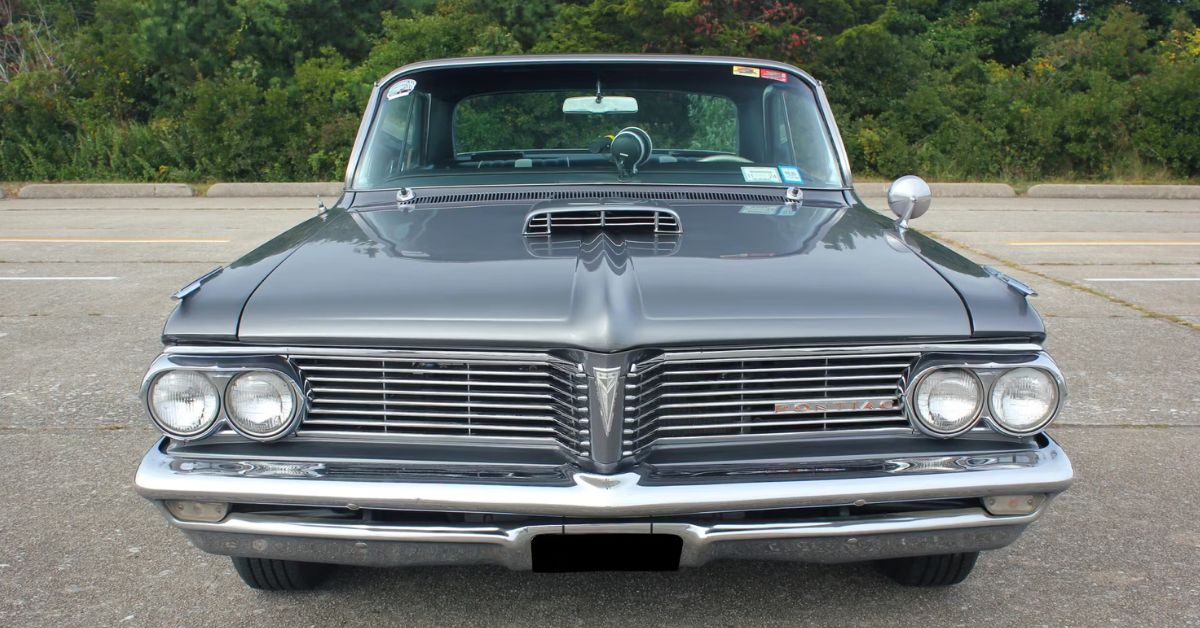
Few engines in American automotive history have achieved the mythical status of the Pontiac V8. More than just a powerplant, it became a cultural symbol—fueling the muscle‑car revolution, inspiring generations of enthusiasts, and cementing Pontiac’s reputation as a performance powerhouse. Today, decades after Pontiac’s final chapter, the roar of its V8 still echoes through car meets, restoration garages, and the memories of anyone who lived through the golden age of American horsepower.
Below is a fresh, engaging 750‑word blog celebrating the legend.
The Birth of a Performance Icon
Pontiac introduced its first V8 engine in 1955, stepping boldly into a new era of performance. At a time when American automakers were racing to build faster, more powerful cars, Pontiac’s engineers crafted an engine that was not only strong but also incredibly adaptable. This flexibility would become the foundation of Pontiac’s performance identity.
The early versions of the Pontiac V8 ranged from 287 to 316 cubic inches, but what truly set them apart was their engineering philosophy. Pontiac didn’t chase displacement for its own sake—they focused on efficiency, durability, and tunability, qualities that would make the engine a favorite among racers and street enthusiasts alike.
The Rise of the Muscle Car Movement
By the early 1960s, Pontiac was ready to unleash something extraordinary. The brand’s performance division, led by the legendary John DeLorean, saw an opportunity to create a new kind of car—one that blended everyday practicality with raw, unfiltered power.
The result was the 1964 Pontiac GTO, widely regarded as the first true muscle car. Under its hood sat a 389‑cubic‑inch Pontiac V8, delivering up to 348 horsepower. This engine didn’t just move the GTO—it ignited a revolution.
The Pontiac V8 became the heart of a movement that celebrated:
- Big displacement
- High compression
- Aggressive cam profiles
- A thunderous exhaust note that defined the era
From drag strips to suburban streets, the Pontiac V8 became a symbol of American freedom and mechanical rebellion.
Legendary Engines That Made History
Over the years, Pontiac produced a series of V8 engines that became icons in their own right. Some of the most celebrated include:
- 389 V8 – The engine that powered the original GTO and helped launch the muscle‑car era
- 400 V8 – Known for its balance of power and reliability, used in Firebirds, GTOs, and full‑size Pontiacs
- 421 Super Duty – A racing‑bred monster that dominated drag strips and NASCAR
- 428 V8 – A torque-rich powerhouse found in high‑performance big‑body Pontiacs
- 455 V8 – The largest and most famous of them all, delivering massive low‑end grunt and unforgettable sound
Each of these engines carried the same DNA: bold engineering, unmistakable character, and a commitment to performance.
The Pontiac V8 Sound: A Symphony of Power
Ask any enthusiast what makes the Pontiac V8 legendary, and many will mention its distinctive exhaust note. Unlike the sharper crack of a Chevy small‑block or the deep rumble of a Ford big‑block, the Pontiac V8 produced a smooth, thunderous growl that was instantly recognizable.
It wasn’t just noise—it was personality. A Pontiac V8 at full throttle didn’t just accelerate; it announced itself, commanding attention and respect.
Engineering That Stood the Test of Time
One of the most remarkable aspects of the Pontiac V8 is its longevity. While other manufacturers constantly redesigned their engines, Pontiac stuck with a single V8 architecture from 1955 to 1981. This consistency allowed engineers and enthusiasts to refine, tune, and push the engine to incredible limits.
The Pontiac V8 became known for:
- Strong bottom‑end construction
- High-flow cylinder heads
- Excellent torque delivery
- Impressive durability under stress
Even today, builders praise the engine’s ability to handle modifications—from mild street builds to full-blown race setups.
The End of an Era
By the late 1970s, tightening emissions regulations and rising fuel prices began to squeeze the life out of big-displacement engines. Pontiac fought hard to keep its V8 alive, but by 1981, production came to an end. The brand itself would fade away decades later, but the legacy of its V8 engines only grew stronger.
Today, restored GTOs, Firebirds, and Trans Ams continue to command attention at auctions and car shows. The Pontiac V8 remains a favorite among collectors, not just for its performance but for what it represents: a time when cars were bold, loud, and unapologetically powerful.
Why the Pontiac V8 Still Matters
The Pontiac V8 is more than a piece of machinery—it’s a symbol of American automotive culture. It represents innovation, rebellion, and the pursuit of pure driving excitement. For many enthusiasts, it’s a reminder of a time when horsepower wars ruled Detroit and every stoplight felt like the start of a drag race.
Even in an age of electric motors and digital dashboards, the Pontiac V8 continues to inspire. Its sound, its history, and its spirit live on in every restored classic and every enthusiast who turns a wrench on one.






Leave a Reply