
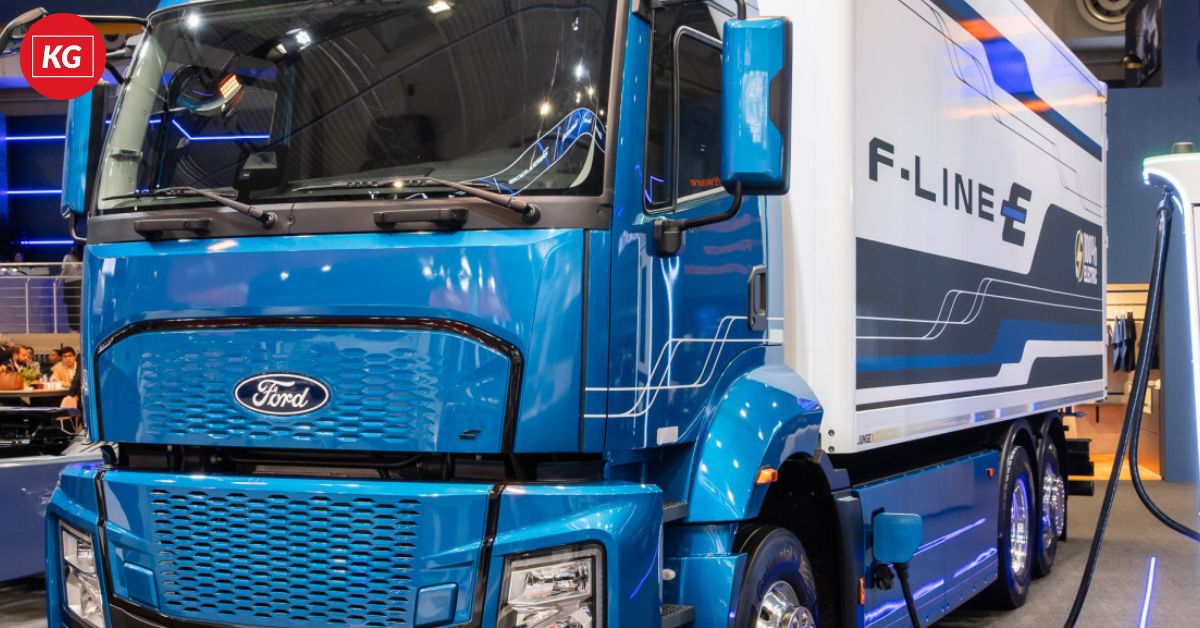
Ford Trucks has officially entered the electric heavy-duty market with the debut of the F-Line E, its first production-ready electric truck. Revealed at the Solutrans 2025 trade fair in Lyon, France, this launch marks a pivotal moment for Ford’s commercial vehicle division, signaling a strong commitment to sustainable transport and zero-emission logistics.
⚡ A Historic Debut
For decades, Ford Trucks has been synonymous with powerful diesel workhorses like the F-MAX. But the unveiling of the F-Line E represents a turning point. This is Ford’s first-ever all-electric truck, designed for distribution and heavy-duty applications in the 19- and 26-tonne class. Built by Ford Otosan in Turkey, the truck will be rolled out across major European markets starting in 2026.
🚚 Configurations and Range
The F-Line E comes in two configurations – 4×2 and 6×2 – offering flexibility for different transport needs.
- Battery Options: Available with three or four battery packs depending on wheelbase and axle setup.
- Range: The 4×2 variant can travel up to 250 km (155 miles) on a single charge, while the 6×2 stretches to 300 km (186 miles).
- Use Case: These ranges make the truck ideal for regional distribution, refrigerated transport, and urban logistics where charging infrastructure is increasingly available.
🌍 Sustainability Meets Practicality
Ford’s entry into the electric truck market isn’t just about following trends—it’s about addressing the pressing need for zero-emission freight solutions. The F-Line E is designed to reduce carbon footprints while maintaining the reliability and toughness that Ford Trucks are known for.
- Zero Emissions: A fully electric drivetrain eliminates tailpipe emissions.
- Noise Reduction: Quieter operation compared to diesel trucks, improving urban livability.
- Operational Savings: Lower running costs thanks to reduced fuel expenses and simplified maintenance.
🛋️ Inside the Cabin
While the spotlight is on the electric drivetrain, Ford hasn’t neglected driver comfort. The F-Line E inherits much of the ergonomic design from the F-MAX, offering:
- Spacious cabin with modern infotainment.
- Advanced driver-assistance systems for safety.
- Intuitive controls tailored for electric operation.
This balance of comfort and functionality ensures drivers can adapt seamlessly to the new electric era.
🔋 Charging and Infrastructure
One of the biggest challenges for electric trucks is charging. Ford Trucks is working closely with European partners to ensure that the F-Line E can integrate into existing and emerging charging networks.
- Fast Charging: Designed to minimize downtime for fleet operators.
- Fleet Integration: Compatible with smart fleet management systems to optimize charging schedules.
🆚 Rivals and Market Position
The heavy-duty electric truck market is heating up, with competitors like Volvo, Daimler, and MAN already fielding electric models. Ford’s F-Line E enters this space with a strong value proposition:
- Competitive Range: 250–300 km is on par with rivals in the distribution segment.
- Brand Trust: Ford’s reputation for durability gives it an edge among fleet buyers.
- Strategic Timing: Launching in 2026 allows Ford to capitalize on expanding European zero-emission zones.
🚀 Looking Ahead
The debut of the F-Line E is more than just a product launch—it’s a statement of intent. Ford Trucks is signaling that it’s ready to compete in the next era of freight transport, where sustainability and efficiency are paramount.
- Future Expansion: Expect Ford to broaden its electric lineup beyond distribution trucks.
- Global Reach: While Europe is the initial focus, markets in the Middle East, Africa, and CIS could follow.
- Dual Strategy: Ford continues to refine its diesel F-MAX alongside electrification, offering customers choice during the transition.
📝 Final Thoughts
The Ford F-Line E is a milestone in Ford’s commercial vehicle journey. It blends practical range, robust design, and eco-conscious engineering into a package that’s ready for the demands of modern logistics. While challenges remain—particularly in charging infrastructure—the debut signals Ford’s determination to be a serious player in the electric truck revolution.

Leave a Reply